Appendix: Breast Milk Substitutes

There are situations, albeit rare, in which breastfeeding is impossible due to health problems of the mother or baby. There may also be various other reasons why a new mother decides not to breastfeed. In such cases, as previously discussed, experts advise against using cow’s milk as a substitute for human milk during the first year of life. Instead, they recommend using infant formula—a processed product, mostly derived from cow’s milk but modified to resemble human milk as closely as possible.

What They Contain

Currently, it is not possible to fully replicate human breast milk, which, in addition to fats, carbohydrates, proteins, vitamins, and minerals, contains many bioactive molecules and beneficial bacteria. The function of these elements is not yet fully understood, and the milk’s composition changes from day to day—even throughout the same day—to meet the baby’s needs. However, infant formula can approximate its nutritional profile fairly closely.

The cow’s milk used as the base for formula is too rich in energy and proteins for infants, so it is skimmed and diluted, with the addition of polyunsaturated fats from vegetable sources, vitamins, iron, and other minerals.

Formulas are also available that are based on soy or rice milk for babies who are allergic to cow’s milk proteins, as well as formulas made with hydrolyzed proteins—broken down at a molecular level to improve digestibility. In recent years, formulas supplemented with probiotics (specific strains of beneficial bacteria that support the infant’s gut flora) and prebiotics (carbohydrates that nourish these bacteria and are not absorbed by the intestines) have also become available.

WHO Guidelines

There are three categories of formula designed for the different stages of a baby’s development: Formula 1 (infant formula): from 0 to 6 months, Formula 2 (follow-on formula): from 6 months to 1 year, Formula 3 (growing-up milk): from 1 to 3 years. The composition of infant and follow-on formula is strictly regulated by WHO guidelines, first issued in 1981 and recently updated by the Nutrition Committee of the European Society for Pediatric Gastroenterology, Hepatology and Nutrition (ESPGHAN) on behalf of the WHO.

Each nutrient has a minimum and maximum allowed concentration, similar to those found in human milk. Iron content, however, is higher than in breast milk.

ESPGHAN has also published guidelines on the introduction of probiotics and prebiotics in infant and follow-on formulas. Adding these microorganisms increases the presence of bifidobacteria and lactobacilli in the gut flora of bottle-fed infants, making it more similar to that of breastfed infants. This results in softer stools, more frequent bowel movements, and a reduced risk of constipation and diarrhea.

Unlike formula 1 and 2, formula 3 (growing-up milk) is not regulated and varies widely between brands.

Generally, these commercial formulas have high energy and protein levels, similar to cow’s milk, and often contain added sugars and flavorings. Most are fortified with iron, vitamin D, and omega-3 fatty acids.
At this stage (1 to 3 years), children eat a variety of foods, and milk or formula is no longer a staple but just one food among many. According to ESPGHAN experts, after the first year of life, mothers who do not breastfeed can choose between cow’s milk, formula 3, or continuing with formula 2. The only advantage of some formula 3 products is their higher content of vitamin D, iron, and omega-3s, which can also be provided through other foods.

How Babies Grow on Formula

One of the main reasons cow’s milk is not suitable as a breast milk substitute during the first year is its high energy, fat, and protein content. Babies fed cow’s milk tend to grow more rapidly and are at higher risk of becoming overweight or obese. This is why WHO and ESPGHAN have set strict limits on the energy content of infant formulas.

Despite this, experts have noted that bottle-fed babies still tend to gain weight more rapidly than breastfed babies, particularly in the first few weeks of life. The typical early weight loss seen in all newborns is less pronounced in formula-fed babies—they lose less weight and regain it faster. Although this might seem beneficial, it could actually contribute to an increased risk of overweight later in life. This phenomenon is partly because infant formula has an energy content similar to breast milk after the milk has come in, but significantly higher than colostrum, which is the baby’s only food in the first days when breastfeeding. Furthermore, colostrum is produced in small quantities. Therefore, a formula-fed newborn has access to more food right from birth—especially since sucking from a bottle is easier than from the breast.

To reduce the risk of excessive weight gain in formula-fed infants, experts recommend feeding on demand, just like with breastfeeding, and paying close attention to hunger and satiety cues. Parents should not insist on finishing the bottle if the baby repeatedly refuses after drinking most of it.

Bottle Preparation

Infant formula is sold in ready-to-use liquid form or as powder to be mixed with water. It is not sterile and may contain bacteria that can be harmful to infants. Proper preparation and storage are essential to avoid contamination and bacterial growth.

WHO guidelines outline the correct procedure: Wash and sterilize all equipment (bottles, teats, containers, scoops) before use with hot water and soap, using a brush to remove residue. Then boil the equipment or use a sterilizer. Wash hands thoroughly and clean the preparation surface.

Boil water and let it cool slightly to at least 70°C (158°F). Pour the correct amount into the bottle and add the powder using the scoop provided, following the package instructions. Close the bottle and shake vigorously to dissolve the powder. Cool the bottle under running water to feeding temperature. Test it on the inside of your wrist—it should be warm, not hot.
Ideally, feed the baby immediately. If the formula needs to be prepared in advance, cool it quickly and refrigerate it at no more than 5°C (41°F), for no longer than 24 hours. To reheat, place the sealed bottle in hot water for no more than 15 minutes. Do not use a microwave, as it can heat unevenly and cause burns. Always discard any leftovers.

Chapter 11 – Store-Bought or Homemade Baby Food

Over the past few decades, supermarket shelves have become increasingly stocked with products for early childhood nutrition, specifically for the delicate phase when new foods are introduced alongside milk feeds in a baby’s diet: cereal-based foods, purees, jars of fruit, and soft cheeses. These products offer parents the advantage of convenience. They are ready-to-eat or only need to be reconstituted with water, and are easy to store and transport. But are they truly suited to the baby’s nutritional needs? Is their quality and safety comparable to that of homemade food made with fresh ingredients?

This topic has sparked strong opinions and debates in the media and on social platforms. Supporters of industrial foods appreciate their convenience and the fact that they are legally subject to strict safety checks before being placed on the market. Their nutritional composition must also meet specific legal standards—unlike homemade food, whose quality can vary depending on the ingredients used, the recipe, and methods of preparation and storage. On the other hand, proponents of homemade baby food criticize commercial products for their high sugar content, the use of preservatives, and their low nutritional value.

From a scientific standpoint, there are few studies comparing complementary feeding based on homemade baby food with that based on commercial products. Most children consume a mix of both, and the quality and ingredients of homemade preparations vary from family to family. There is no universal standard for comparison.

Based on recipes commonly used by parents, one study (17) found that homemade foods tend to be more nutritious than industrial products, with higher energy density, protein, and iron content. Homemade cooking also tends to have more salt—slightly more than what is recommended by specialists. Commercial products, though not allowed to contain added sugar by law, often rely on fruit juice and naturally sweet vegetables like pumpkin, carrot, and potato to enhance flavor (18), which can result in a higher content of natural sugars than in homemade food. Also, the flavor of industrial foods is often quite uniform, while homemade cooking exposes children to a wider variety of tastes—an important step in training their palate.

Subscribe to the newsletter

Be the first to receive the latest news from the Baby Wellness Foundation!

In conclusion, the studies conducted so far do not show significant nutritional differences between homemade and commercial baby food, provided that parents are aware of the content and characteristics of both when choosing what to offer. For example, 100 grams of chicken baby food does not equal 100 grams of chicken. It usually contains about 40 grams of chicken, mixed with other ingredients like potatoes. This is in accordance with the directive that regulates baby food sold in Europe (19). If the product name includes two or more ingredients, with meat listed first (e.g., “chicken and vegetables”), the minimum chicken content allowed by law is 10%. If the name is “vegetables and chicken,” with meat listed second, the minimum drops to 6%. So, to determine how much meat your baby actually consumed, you must check the ingredient list on the label—not just the product name.

What about safety? The European Directive on baby foods strictly limits the presence of pesticide residues and contaminants in commercial products, so they are not riskier than homemade foods. However, packaged foods require preservatives, which are absent in meals made with fresh ingredients and served immediately to the baby. Even though the European Directive limits the number of allowed additives, experts agree that fresh foods are superior to preserved ones. Ultimately, the key factors behind daily choices should be awareness, dietary variety, and a flexible approach, one that realistically takes into account the parents’ available time.

Regardless of the food chosen, the most important factor in encouraging your child to accept meals is the atmosphere in which the food is not only offered but also prepared. The true key ingredients of every meal are family harmony and calm.

Chapter 10 – When to Start with Cow’s Milk

Cow’s milk is rich in energy, protein, and calcium, making it a valuable component of the diet for adults and children. However, it is not suitable as a substitute for breast milk during the first year of life. It contains less iron than human milk, and the small amount it does have is poorly absorbed due to interference from calcium and casein at the intestinal level. Additionally, because its proteins are less digestible than those in breast milk, cow’s milk can cause colitis and minor bleeding in the intestinal mucosa in infants, leading to hidden blood loss in the stool and a further depletion of iron stores.

Several studies have shown that infants fed primarily with cow’s milk during their first year of life are at greater risk of iron deficiency compared to those fed with human milk or infant formula (15).

Subscribe to the newsletter

Be the first to receive the latest news from the Baby Wellness Foundation!

Moreover, cow’s milk is high in mineral salts. Filtering them places a heavy burden on the kidneys of a small child. Under normal physiological conditions, after the age of one, this strain typically does not pose a health risk. However, in situations involving fluid loss, such as with fever or diarrhea, the added stress on the kidneys increases the risk of dehydration.

Finally, the excessive protein concentration (in relation to a baby’s needs) in cow’s milk may contribute to a greater risk of becoming overweight later in life.

For these reasons, according to experts from the World Health Organization and Italy’s Ministry of Health, cow’s milk and its derivatives may be introduced in small amounts as part of complementary feeding starting at 6 months. However, it should not be offered as the main milk source to replace breast milk within the first year of life (16). Some pediatric specialists and scientific societies go even further and recommend waiting until 24 to 36 months of age before including cow’s milk as a significant part of the diet.

Chapter 9 – Introduction of Foods and Allergy Risk

Until 10–15 years ago, recommendations suggested delaying the introduction of foods typically associated with allergies—such as fish, egg yolk, nuts, and peanuts—until 10–12 months of age. It was believed that early exposure to potential allergens increased the risk of developing allergies. The same belief applied to gluten: it was thought that its early introduction could raise the risk of celiac disease. Expectant mothers with a family history of allergies were advised to avoid eating nuts, shellfish, and other potential allergens during pregnancy to prevent fetal exposure through the placenta. The same recommendation was extended to breastfeeding mothers.

However, research in recent years has completely overturned the long-held beliefs of experts (13).

Studies have shown that exposing infants to potential allergens or gluten after 4 months of age does not increase the likelihood of developing allergies or celiac disease—neither in the general population nor among high-risk infants (those with a family history of allergies).

Subscribe to the newsletter

Be the first to receive the latest news from the Baby Wellness Foundation!

On the contrary, results suggest a reduced risk (14) for children with a family history of allergies when these foods are introduced between 4 and 6 months of age. Although this reduction is mild and does not justify early weaning, it adds to the evidence that exclusive breastfeeding for six months also helps reduce the likelihood of allergies. Therefore, the current best practice recommended by experts is to breastfeed exclusively for six months and then begin complementary feeding without needing to follow a strict order in the introduction of foods.

Chapter 8 – Baby-led Weaning

The first foods introduced beyond milk have traditionally been offered as purées or mashed meals, administered with a spoon, without the baby’s active involvement. In the last 10–15 years, a new trend has emerged that has gained considerable popularity among parents: baby-led weaning (BLW) or self-weaning.

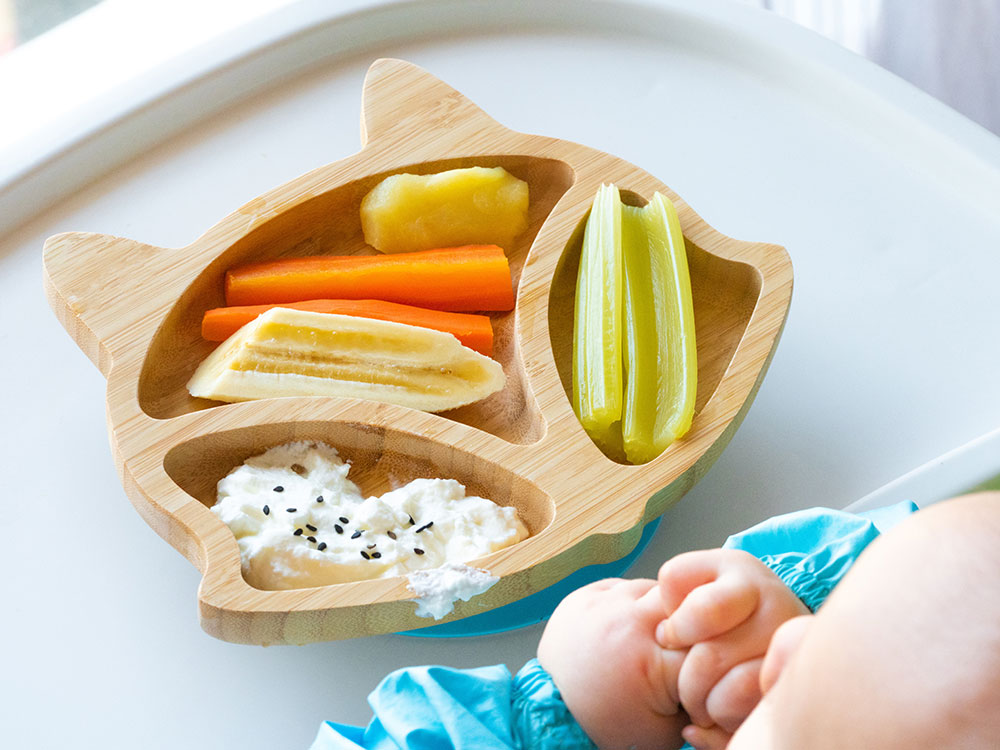
This method involves offering the baby small pieces of the same foods consumed by the rest of the family right from the start and encouraging them to grab, bring to the mouth, and taste the food on their own, following their curiosity and appetite (11).

The supposed benefits of this approach include stimulating the child’s autonomy and self-regulation skills, familiarizing them from the beginning with a wider variety of flavors and textures, and more actively involving them in family life by fully sharing the table experience. However, some pediatricians and parents who are less enthusiastic about this practice fear a greater risk of choking and an inadequate or low-nutrient diet, potentially leading to delayed growth.

It is not easy to objectively evaluate baby-led weaning, as it is rarely applied in a purely exclusive way. Often, the same child is offered both adult-style finger foods and traditional purées. Moreover, the nutritional choices reflect the more or less healthy dietary habits of the family. In recent years, the first studies on the subject have been conducted on a relatively large scale (12).

Subscribe to the newsletter

Be the first to receive the latest news from the Baby Wellness Foundation!

So far, the collected data does not show an increased risk of choking, iron deficiency, or malnutrition in children exposed to this practice. On the other hand, there is no solid evidence of better appetite regulation or a lower risk of obesity. If children eat smaller amounts of solid food compared to those fed purées, they tend to compensate temporarily by drinking more milk.

Parents who want to try this approach should, according to experts, follow certain precautions: if the child is allowed to eat what the parents are eating, the entire family must follow a particularly healthy and balanced diet; at every meal, the child should be offered at least one iron-rich food and one high-energy food; the food pieces should be sized so that the child can easily grasp and bring them to the mouth, have a texture appropriate to the child’s chewing and mashing ability, and should not crumble or separate into long fibrous strands—such as a whole slice of ham, for example.

Chapter 7 – A Gradual Approach

During the first 6 months of life, breast milk provides the baby with everything needed for healthy growth. After that, iron starts to become deficient. Breast milk isn’t rich in iron and, by this age, the reserves accumulated by the baby during pregnancy are depleted.

The energy provided by milk alone also becomes insufficient to meet the growing child’s needs, even though breast milk becomes richer in fats and calories over time.

Moreover, the baby gradually acquires the ability to sit up independently with good neck control and begins to develop the muscles needed to swallow small amounts of semiliquid food.

This is why, according to the WHO, the right age to start introducing complementary foods is from 6 months onward (10). From 6 to 8 months, WHO guidelines recommend offering 2-3 small meals a day of complementary foods, while continuing to breastfeed on demand. Between 8 and 12 months, meals may increase to 3-4 per day, then adding 1-2 snacks a day after the first year.

For safety reasons, the baby should always eat while seated upright, in the presence of an adult. The ideal—and safest—solution is to use a highchair.

A wide and comfortable seat, strictly equipped with safety straps to prevent slipping, an adjustable footrest to grow with the child, and a reclining backrest for comfort and relaxation, makes the highchair the perfect seat for exploring new tastes and textures. Some models are also height-adjustable and come with a removable tray—not only for easy cleaning but also to allow the child to join the family at the table and share mealtime. When choosing the right product, it’s important to consider available space and intended use: if space is not an issue, a fixed model can work; otherwise, a foldable model with wheels is more practical for small spaces.

Some seats are designed to grow with the child and be used through adulthood—not only for mealtimes but also for play, study, and work. A highly recommended option, once the child can sit independently, is a table seat that attaches securely to the table. It gives the child a front-row seat at family meals, letting them observe, touch, and share food with parents. These seats also allow parents more freedom, as mealtimes no longer have to be separate. They also support learning through imitation—children often copy adults or older siblings, using cutlery, cups, and napkins. Eating together is important nutritionally too, as certain foods (like vegetables) that may not be appealing to the child become more desirable when everyone is eating them. A child accustomed to sitting at the table is also more comfortable eating out, for example at restaurants. With a foldable table seat, it’s easier to go out, eat, and enjoy social life—supporting family wellness.

Subscribe to the newsletter

Be the first to receive the latest news from the Baby Wellness Foundation!

There are also booster seats that attach to regular chairs, available in various styles and materials. For a complete mealtime setup, parents can choose a dedicated feeding set: decorated plates, rounded-tip cutlery (also available in soft versions), and cups with spouts and handles—designed to entertain and stimulate the child, making the transition to complementary feeding more enjoyable.

Once the right tools are in place, the focus can shift to meal preparation. Initially, food should be soft enough for the baby to mash with their tongue against the palate. It should not contain hard chunks like pieces of raw apple or carrot, nor should it crumble in the mouth. Harder textures can gradually be introduced in the following months.

Even at this stage—as during breastfeeding—the child should never be forced to eat when not hungry. It’s essential to respect their individual pace. If the baby dislikes a food, experts recommend not insisting, but trying again the next day or after some time.

As for food choices and quantities, the WHO notes that many local guidelines are overly prescriptive and based more on tradition than scientific evidence. It’s not important to introduce rice before tapioca or chicken before veal, nor to weigh ingredients down to the milligram. What matters is variety, to ensure a balanced intake of nutrients. It’s also difficult to recommend exact portion sizes, as babies should be encouraged to recognize their sense of fullness and are not expected to finish everything on the plate. Nutritional needs change based on growth and milk intake—better to follow the baby’s appetite.

So, no rigid rules, just a few WHO recommendations: include at least one protein- and iron-rich meal each day—whether meat, eggs, or fish—and offer fruits and vegetables rich in vitamin A (like broccoli, kale, apricots, melon, peaches, cherries) and vitamin B (such as chicory, spinach, and peas, which should always be mashed).

By one year of age, the child can begin eating what the adults eat, under supervision to reduce choking risks and with moderated salt and sugar intake. Breast milk can still be part of the diet.

Chapter 6 – Weaning

The word “weaning” literally means to take away a habit, in this case the “habit” of breastfeeding. But being breastfed is anything but a bad habit: it is a powerful tool for promoting the health of the child and their future adult self. That’s why today, instead of “weaning,” we prefer to talk about complementary feeding. This expression better clarifies the purpose of this transitional phase, which is not to remove milk as quickly as possible and replace it with other foods. In fact, breast milk continues to be the main source of energy and nourishment for the baby throughout the first year of life. After six months, it becomes necessary to supplement the diet with semi-liquid foods, without completely replacing milk.

This transitional phase also helps the child learn to manage solid food, to use their gums, tongue, and teeth to chew, move food in the mouth, and swallow. It’s a time to discover new flavors, form future eating preferences, and strengthen awareness of appetite and the sensation of fullness. It is a very important stage of development and, undoubtedly, an exciting one for both baby and parents, who are eager to guide their child through the discovery of flavors and good food and to observe their reactions during the first tastings.

As with every stage of growth, each child has their own pace and way of approaching complementary feeding. Some are cautious or even hesitant, while others are curious and adventurous, eagerly diving in and then reconsidering. What matters is that the moment of the first solid meals doesn’t become a source of stress: if at six months the child isn’t ready to try, they will do so when they feel ready — thanks also to the support, patience, and encouragement of mom and dad. So, no worries if the baby doesn’t immediately respond positively to new foods, if they refuse or make a mess, or if they continue to ask for milk often. The process of learning and taste education takes time and should never compromise the pleasure of enjoying mealtimes peacefully.

Subscribe to the newsletter

Be the first to receive the latest news from the Baby Wellness Foundation!

On that note, it’s good to remember that children’s taste preferences are very different from adults’, as their sensory abilities are still developing. Foods that may taste bland to adults may be very flavorful to a baby, and sweet flavors, reminiscent of milk, are often preferred. Mealtime management is also very different: babies take longer, pause often, and may firmly refuse food. During this special phase, it is important not only to ensure variety and balance in the menu, including foods with the “right consistency” for their chewing abilities, but also to be patient and approach the process gradually, respecting the child’s timing — and even their refusals. One of the most common mistakes is to force the child to finish their meal at all costs. In reality, forcing them undermines the joy of eating and their natural ability to regulate hunger. If half the meal is left on the plate at the end, there is no need to worry — maybe the portion was just too large or the child was full.

It’s also important to remember that it’s never too early to begin teaching young children about taste and well-being at the table. Eating should be a pleasure, and the child should experience meals in a calm, stress-free environment. This is why the atmosphere during meal preparation is crucial — the calmness of the parents during these first feedings, and also what the child sees and experiences around the table when the family gathers. When a child starts eating solid foods, it’s a good idea not to isolate them, but to place them at the table with everyone else and let them share in family meals, without distractions like TV, tablets, or toys. Simply being together and sharing mealtimes teaches the child not only about taste but also about the joy of eating. It’s clear that coordinating family mealtimes with the baby’s needs is not always easy, but gradually and whenever possible, it’s important to establish a sort of family mealtime ritual that allows children to feel like they are truly part of it.

Chapter 5 – Qualified Support to Build Confidence

Breastfeeding is a physiological function of the maternal body, and health issues in the mother or baby rarely make it impossible. In particular, there are very few cases in which a mother cannot produce enough milk to nourish her baby. Yet, more than a third of women who switch to formula milk within three months after giving birth say they do so because they believe they do not produce enough milk—highlighting a problem of misinformation and lack of confidence in their abilities.

Italian women want to breastfeed and are aware of how important it is for their children’s health. In fact, 96.5% of them express this intention during pregnancy. However, not all manage to fulfill this goal after birth. In the days following delivery, 91.7% actually breastfeed, but only 59.9% do so exclusively, without any formula. At three months postpartum, 72.3% of mothers breastfeed, 49.3% exclusively. At six months, 56.4% breastfeed, and only 6.4% exclusively (8).

To help new mothers fulfill their desire to breastfeed, they must be adequately supported. Clear information is needed during pregnancy, a favorable environment immediately after birth, skin-to-skin contact with the baby, early initiation of breastfeeding, rooming-in at the hospital, and qualified assistance to resolve any initial latch issues.

It is also essential that new mothers do not feel suddenly left alone once they return home. They should be able to rely on the support of their partner and family, as well as on home visits from a midwife and gatherings with other properly trained mothers to share experiences and challenges in a supportive, non-judgmental environment that fosters trust.

Surveys conducted over the years by the Istituto Superiore di Sanità (Italian National Institute of Health) confirm that the chances of exclusive breastfeeding at three months postpartum are higher if the mother attended prenatal classes, had rooming-in at the hospital, and joined postnatal support groups with midwives and other mothers.

Subscribe to the newsletter

Be the first to receive the latest news from the Baby Wellness Foundation!

Today, new mothers are often overwhelmed with unsolicited comments, opinions, and advice on any topic—especially breastfeeding. The quantity, quality, or taste of breast milk, along with the frequency and duration of feeds, are frequently questioned, often by those who should be offering help. When there is too much pressure and not enough support, a mother’s desire to breastfeed may not be enough. It’s not easy to ignore such remarks, especially when they fuel doubts and uncertainties that are completely normal after childbirth. But it’s important to trust oneself, to believe in one’s body’s ability to breastfeed, and in the undeniable quality of one’s own milk. At the same time, mothers should be aware that if particular difficulties arise, bottle feeding is always an option—and this does not mean giving up the meaningful experience of feeding.

When a mother breastfeeds her baby, a magical bond is created — made of eye contact, warmth, scents, and physical closeness: unique and memorable moments for both mother and baby as they get to know each other, understand each other, and connect. These feelings can also arise even if the baby is not directly nursing: if the mother holds the baby close to her breast in skin-to-skin contact, keeping them close and maintaining eye contact, whispering loving words—then the magic is there. With calm and serenity, free from guilt, the relationship between mother and baby is built from thousands of gestures, gazes, and gentle touches—turning everyday care into unforgettable moments that strengthen their bond.

Chapter 4 – Breastfeeding Positions

In the early stages of breastfeeding, when mother and baby are getting to know each other, it can be very helpful to try different positions. This not only supports a good start to breastfeeding but also helps make the feeding a moment of wellness and relaxation for both. The position that gives the baby the most freedom is the same as the breast crawl: the mother leans back against some cushions propped up on a sofa, the headboard, or an armchair, places the baby on her chest, tummy to tummy, in an upright position, and lets the baby find the nipple and latch on. The mother is in a relaxed position and the baby can move freely and follow their instinct.

This position is particularly suggested when the newborn has trouble latching or when the mother’s let-down reflex is strong: gravity reduces the milk flow and the baby can detach if too much milk comes out. For early feedings, the transition hold is also recommended: it helps the mother guide the latch while making the baby feel safe and secure, so they can relax and focus solely on nursing. The mother supports the baby with one arm, holding them close to her body with the baby’s feet tucked under her armpit, and latches them onto the opposite breast. When the baby’s body is fully supported, they learn to latch and suck properly more easily.

Mothers must also be comfortable so they can relax during feedings, avoiding muscle strain in the neck, shoulders, and back. For example, a pillow under the arm supporting the baby can help relieve some of the weight. The transition hold is a variant of the cradle position, used by most mothers, especially outside the home. The mother holds the baby with one arm, facing her with their nose aligned with the nipple, latching onto the same side, keeping the other hand free.

Subscribe to the newsletter

Be the first to receive the latest news from the Baby Wellness Foundation!

Another option is the rugby or underarm position: the baby’s body is placed under the mother’s arm on the same side of the feeding breast. The mother supports the baby’s head with her hand, facing the nipple, and the feet point toward her back. This position is helpful after a cesarean, since the baby doesn’t press on the scar. It’s also useful when the mother has large breasts and wants to better control the latch or when the baby is sleepy, as this position allows for a strong milk flow right from the start.

After a cesarean or immediately after birth—or whenever the mother wants to rest—feeding while lying on the side is also possible. The mother lies next to the baby, their bodies close, the baby’s face in front of the breast and nose aligned with the nipple, supporting them in position by placing her arm behind their back.

Finally, there’s the “wolf position”, recommended in cases of clogged ducts or breast engorgement. The baby lies on their back in the middle of the bed (or on a cushion if needed), while the mother gets on all fours over the baby to nurse from above. Gravity and the baby’s suction help drain the milk and relieve breast tension. Whatever position is chosen—and each mother-baby pair will find their best fit through trial and error—it is always important to ensure a correct latch. The baby’s nose should be aligned with the nipple, the mouth wide open and a large part of the areola, not just the nipple, should be in the mouth.

During feeding, the baby naturally alternates between sucking and swallowing, and there should be no clicking or other noises. If the latch is incorrect or painful, gently detach the baby and try again. Breastfeeding should never be painful. If a mother feels unsure about how to position her baby correctly, it’s best to seek help from a breastfeeding expert right away: a midwife from the health clinic, a La Leche League volunteer, or a certified IBCLC (International Board Certified Lactation Consultant). This professional figure is specialized in the clinical management of breastfeeding and human lactation and is trained according to the IBLCE (International Board of Lactation Consultant Examiners) standards, created in the U.S. in 1985 to ensure consistent, high-quality training.

Chapter 3 – The Breastfeeding Rite

Understanding the composition and properties of breast milk helps dispel many unfounded and counterproductive myths about breastfeeding, allows for evidence-based recommendations, and gives mothers back awareness and full confidence in their abilities.

For example, it is absolutely not true that colostrum is insufficient or lacks the nutrients needed by a newborn. It contains everything required to support healthy development in the first days of life. Supplementing it with formula milk or glucose solution would interfere with the initiation of breastfeeding. If the baby is allowed to stay with the mother and nurse whenever they wish, without fixed schedules, it is the baby who triggers the milk coming in through frequent suckling.

In the days and months that follow, through the same mechanism, the baby regulates milk production according to their needs: the hungrier they are, the more frequently they nurse, and the more they stimulate the breast to produce.

In the first 2–4 days after birth, a baby loses up to 10% of their initial weight. This is known as the physiological weight loss, a natural phenomenon observed in all healthy, full-term, breastfed babies. It should not be a cause for concern: it does not mean the baby is undernourished. Over the following days, the lost weight is naturally regained, with the baby typically returning to their birth weight by the second week of life(4).

Another normal phenomenon that should not cause concern is the fact that, during the first few weeks, the baby often seems to be constantly hungry and frequently asks to nurse. Does this mean the mother’s milk is not nutritious enough? Absolutely not: the newborn has a small stomach and can only hold a small amount of milk at each feeding. To meet their daily energy needs, they may nurse as often as 10–12 times in 24 hours. Some babies feed quickly and are satisfied in just a few minutes, while others are slower and need more time, spending longer at the breast. Their feeding patterns are physiological, and it is important to respond to them.

Subscribe to the newsletter

Be the first to receive the latest news from the Baby Wellness Foundation!

Every baby has their own needs and rhythms. The practice of scheduled feeding at fixed times for all infants—once recommended by childcare manuals—is now rightly seen as an unnecessary constraint. In the first months of life, it’s difficult even for the same baby to feed at the exact same times every day: there are days when the baby has less appetite, hot days when they feel thirsty and nurse more often to stay hydrated, or days when they’ve reached a new developmental milestone and need an extra boost of energy.

But how can you tell if a baby is well nourished? In the past, it was common practice to do a “double weighing,” meaning the baby was weighed before and after each feed to check if they had eaten enough. Today, this method is no longer recommended. Since the composition and caloric density of breast milk can vary even throughout the day, the amount taken at each feed is not a meaningful indicator of whether the baby is feeding adequately. It’s more useful to check how often the baby wets their nappy: in the first weeks of life, they should be filling 5–6 nappies a day. Regular check-ups with the paediatrician are also crucial. If the doctor confirms that the baby is growing appropriately, it means they are well nourished and do not need to be encouraged to drink more milk.

Allowing the baby to eat when they are hungry and stop when they are full helps them develop the ability to self-regulate—a skill that protects against the risk of obesity throughout life. Feeding on demand also supports the baby’s cognitive development. A British study from 2013 showed that babies fed in this way have higher IQs and better academic performance, at least up to the age of 14(5).

As the months go by, feeds naturally become less frequent. The baby’s stomach grows, they consume more milk at each feeding, and the milk itself becomes richer in fats and nutrients essential for growth. The WHO recommends continuing exclusive breastfeeding up to six months of age, and then introducing complementary foods—without removing or limiting breast milk. It is important to keep responding to the baby’s cues, trusting the self-regulation skills they developed in the first weeks of life(6). Breastfeeding can continue up to two years and beyond, if both mother and baby wish to do so.

As for maternal diet and lifestyle during breastfeeding, the recommendations are the same as those for overall good health(7). There is no need to “eat for two,” since the woman’s body draws on fat reserves accumulated during pregnancy to produce milk, helping her return to her pre-pregnancy weight. The diet should be healthy and varied; alcohol is not completely prohibited as it is during pregnancy, but should be limited to one glass of wine per day. It is also recommended to avoid or moderate coffee consumption. Smoking is strongly discouraged during breastfeeding, just as it is during pregnancy. Dietary supplements and herbal products should be taken with caution and only after consulting a doctor.

Chapter 2 – The Ideal Food and Much More

We have long known, in broad terms, what human milk contains: proteins, sugars, fats, vitamins, and minerals. But only in recent years—thanks to advances in molecular analysis—has science begun to explore the diversity of its components and their importance for the child’s body.

The more time passes and the more it is studied, the more we understand how precious breast milk is for the baby’s development and future health. It is the species-specific food, ideal for the human infant, and it is produced each time tailored to the baby’s changing needs.

Between the first and third day of the baby’s life, the new mother produces just a few drops of yellow-colored liquid.

This is colostrum, also known as “liquid gold”, which contains less sugar and fat than mature milk but is extremely rich in highly digestible proteins, minerals, and vitamins, as well as phagocytes(“scavenger cells”), antibacterial, and antifungal agents. Its yellow, serum-like color is due to its high concentration of immunoglobulins (components of the immune system), nucleotides, minerals, and vitamins (especially A, D, K, and B12). Of the more than 200 different carbohydrates present in colostrum, only a small portion is digested and absorbed by the newborn (1). The rest nourishes the bacteria that have started to colonize the baby’s gut. By offering this first milk, the mother initiates the selection of her child’s intestinal flora, supported by the action of maternal antibodies passed through the milk and by proteins that slow down the growth of pathogenic microorganisms.

Subscribe to the newsletter

Be the first to receive the latest news from the Baby Wellness Foundation!

After a few days of colostrum, the milk “comes in”—the beginning of full breast milk production. The timing of this event can vary, but it usually occurs between the third and fourth day after birth and is marked by specific symptoms. The most common ones include breast engorgement, possible pain, warmth, or tingling inside the breast. These symptoms are usually relieved by the baby through breastfeeding.

Milk production is triggered by increased levels of prolactin, a hormone stimulated by the baby’s sucking, which allows milk to flow from the glandular tissue of the breast into the milk ducts.

From the 4th to the 10th day after birth, breast milk becomes transitional milk: abundant, slightly yellow, energy-dense, and high in fats and carbohydrates, though lower in minerals and proteins. This is followed by mature milk, rich in fats and carbohydrates and with a carefully balanced content of proteins and minerals, adjusted to meet the baby’s growing nutritional needs.

By one month after birth, the transition from colostrum to mature milk is complete—but the milk continues to adapt constantly to the baby’s needs. For instance, the milk taken at the start of a feed, when the breast is full, is more watery and sugar-rich. It quenches thirst and meets immediate energy needs. As the feeding continues, its composition changes, and the fat content increases. Interrupting the baby’s feed shortly after it begins and switching sides would prevent the baby from accessing the more nutritious portion of the milk (2). On hot days, the milk becomes more watery. In the evening and nighttime, it becomes richer in hormones like oxytocin, which promote relaxation and sleep.

Breast milk plays a critical role in supporting the baby’s immune system y providing the necessary defenses to fight off pathogens through antibodies (mainly immunoglobulin A – IgA). It also acts as an immunomodulator, enriching the baby’s gut microbiome.

The percentage and composition of fats also evolve over time. From two to six months, and even more so by one year, the baby grows, feedings become less frequent, and the energy required per meal increases. Contrary to the myth that breast milk “turns into water,” it does not lose its nutritional power—on the contrary, it becomes richer, aligning with the baby’s needs. Its composition includes a higher proportion of fatty acids, essential for the development of the central nervous system, vision, and neuro-motor functions. Among the proteins, those contributing to brain development also increase (3). Breastfeeding is a flawless system, perfectly refined through millennia of evolution.

Chapter 1 – The Best Nourishment from the Very Beginning

come si nutre il neonato

Eating, from early childhood, has not only biological but also psychological, social, and cultural significance. As soon as a baby is born, they are placed on the mother’s breast to promote bonding and the successful initiation of breastfeeding: in this way, the baby receives the best possible nourishment and the deep bond between mother and child—known as bonding—is strengthened. As the months go by, moments related to breastfeeding and the first solid foods continue to have fundamental importance, also in terms of relationships and psychophysical development. Even in intrauterine life, the baby experiences and gradually refines their ability to feed and swallow.

Once born, the baby already has genetic potentials, which are expressed through instinctive behaviors that allow them to survive immediately after birth: reflexes. Some of these, such as the sucking reflex, form the foundation—together with the sensory systems—on which subsequent abilities will be built and, over time, will become true skills.
During the first year of life, the feeding function is made up of new experiences that follow one another rapidly. Consider that only six months pass from when the baby’s diet is exclusively milk-based to the introduction of the first spoon-fed foods and, later, various solid foods.

Subscribe to the newsletter

Be the first to receive the latest news from the Baby Wellness Foundation!

To go through all these developmental stages, the baby must explore many sensory and motor novelties. They learn to recognize different flavors, become familiar with various temperatures, textures, shapes, and smells, and must manage and refine muscular activity through the movements of the mouth, tongue, cheeks, swallowing (and later chewing) while simultaneously developing digestive maturity at the gastric and intestinal levels.

Every day, multiple times a day, the child encounters new things to observe, face, and manage. For this reason, it is essential that they feel supported and that there is an atmosphere of trust around them. In this respect, Maria Montessori was a strong advocate of children’s autonomy—even at the table. According to Montessori, whose educational methods are studied and followed worldwide, young children must feel free to experiment, touch food, manipulate it, and bring it to their mouths with their hands. But that’s not all: it’s also important to share meals together as much as possible, because “children should not be taught, but shown how to eat.”
If a child feels free to act and perceives a peaceful atmosphere around them, they feel understood and supported in all the phases of this delicate and crucial stage of growth—decisive for their overall wellness.