
During the summer months, newborns are particularly vulnerable to heat. The following practical recommendations help prevent overheating, protect their delicate skin, and ensure adequate hydration.
Sun Exposure and Outdoor Environment
- Never leave a newborn or child alone in a car under the sun. The temperature inside a vehicle can rise rapidly, and hyperthermia in children can occur in as little as 20 minutes (the use of an anti-abandonment device is mandatory where required by law).
- Warning: hyperthermia can occur even on mild days, with temperatures around 22°C (72°F). The interior of a vehicle can easily exceed 40°C (104°F).
- Keep in mind that during the summer, solar radiation is more intense and the risk of sunburn is higher in mountainous areas and in environments with reflective surfaces such as snow, water, and sand.
- Windy or cloudy conditions may actually increase the risk of sunburn because the sensation of heat is reduced.
- Avoid taking your newborn outdoors during the hottest hours of the day (the highest-risk period is from 11:00 a.m. to 3:00 p.m.).
- Use sunshades to protect the baby from direct sunlight.
- Children should be exposed to direct sunlight cautiously and only after the first year of life. Sunlight promotes vitamin D production, but exposure should always be gradual.
- Families living in urban areas should be aware of the potential risks associated with high ozone levels, a gas that forms during the hottest hours of the day and can irritate the respiratory tract. Young children, particularly those with asthma, are especially sensitive. In general, it is preferable to go outdoors in the morning, when ozone concentrations are lower.
Skin Protection
- Always use high-protection sunscreen. Choose sunscreens with SPF 50 or 50+ that provide protection against both UVB and UVA rays, applying an adequate amount (for adults, the recommended quantity is approximately 19 grams, equivalent to 3–4 teaspoons).
- Sunscreen should be applied at least 15 minutes before sun exposure, reapplied every two hours, and always after swimming or heavy sweating, even if the product is labeled water-resistant.
- Remember that UV rays penetrate clothing and beach umbrellas; therefore, sunscreen should also be applied when staying in the shade. Sun protection should be used not only at the beach or in the mountains, but whenever a child is outdoors.
- Sunburn often appears several hours after sun exposure and not only when the skin becomes visibly red. Children with very fair skin and red or very blonde hair burn more easily and require additional protection.
- Sunscreens with SPF 50 block up to approximately 98% of UVB rays. It is also important to remember that the SPF value refers only to protection against UVB radiation, not UVA rays, which penetrate more deeply into the skin and contribute to skin aging.
Hydration and Nutrition
- Newborns should be breastfed more frequently to ensure adequate fluid intake. Mothers are also advised to drink more fluids than usual, not to alter the composition of their breast milk, but to avoid becoming dehydrated themselves.
- To prevent dehydration, children should be offered fluids frequently: room-temperature water, given in small sips. A diet rich in fruits and vegetables is also recommended.
- During heat waves, special attention should be given to children with underlying health conditions (such as heart disease, circulatory disorders, respiratory illnesses, or asthma), as they are more sensitive to high temperatures and elevated ozone levels.
- Keep in mind that diarrhea and neurological disorders increase the risk of hyperthermia and dehydration during childhood.
Clothing and Keeping Cool
- Dress newborns in light-colored, lightweight cotton clothing, which allows better air circulation and helps the skin breathe.
- Protect the baby’s head with a light cotton hat.
- Cool the baby regularly by wetting the head, giving a lukewarm bath (without shampoo), or gently refreshing the skin with a damp cloth.
Carrycot, Strollers, and the Home Environment
- Increase air circulation in the environment where the newborn spends time.
- Monitor and maintain an appropriate indoor humidity level.
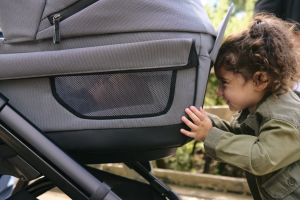
- Choose prams and strollers made from breathable materials with UV protection (UPF 50+), featuring mesh inserts in the canopy to improve airflow inside the seat and help maintain a cool, comfortable, and healthy environment for the baby.