
Bees: small allies for life
Who hasn’t ever stopped to observe a bee while it collects pollen and nectar from a flower? It is an experience that should be part of every person’s life, for its beauty, the wonder it evokes and the inspiration it can give rise to.
The bee undoubtedly represents one of the insects towards which humans have always shown great attention and curiosity, capable of evoking fascination since ancient times. The reasons for this interest are numerous and profound. From a scientific point of view, bees play a fundamental role in ecosystems thanks to their pollination activity, indispensable for the reproduction of many plants and for the production of numerous foods. Furthermore, they are highly organized social insects, equipped with sophisticated communication systems and capable of producing substances of nutritional and biological interest such as honey, propolis and royal jelly. Their presence also represents an important indicator of environmental health and biodiversity. A curious fact is that a worker bee visits up to several thousand flowers a day and, over the course of its life, produces on average an amount of honey equal to about one-twelfth of a teaspoon.
The fact is that, fortunately, bees are part of our daily lives much more than we often think. We meet them in gardens, in parks, among the flowers in spring. For children, they are often a small discovery of nature, while for others they can be a source of fear, especially due to the fear of stings.
Knowing bees means accompanying children to understand the importance of respecting nature, coexisting with other living beings and the awareness that human well-being depends profoundly on the balance of the environment. It is also essential to teach how to behave correctly in the presence of bees, avoiding attitudes that could disturb or scare them, and to know the simple prevention and protection measures to reduce the risk of stings, fostering a safe and respectful relationship with these precious insects.
Why bees are fundamental for the environment and for our diet
Bees are among the most important natural pollinators and, in recent years, awareness of their fundamental role has grown significantly. Fortunately, more and more attention is being paid to this topic today.
By transporting pollen from one flower to another, bees allow plants to reproduce and fruits to develop. Without their tireless silent work, many food crops would not exist or would have a drastically reduced production.
According to the Food and Agriculture Organization of the United Nations (FAO) and the World Health Organization (WHO), about 75% of the world’s food crops depend at least in part on animal pollination. Fruits, vegetables, oilseeds, nuts and many other plant species exist thanks to the daily contribution of bees and other pollinating insects.
A surprising curiosity: a bee can visit up to 2,000–5,000 flowers in a single day, collecting nectar and pollen without stopping and thus contributing in an extraordinary way to the balance of ecosystems.
Bees, moreover, do not only produce honey: they also give life to other precious compounds for well-being, such as royal jelly and bee bread. With their work they contribute to biodiversity and the maintenance of ecosystems, promoting the growth of spontaneous plants that feed other animal species and thus helping to preserve natural balances on which human health also depends.
In recent years, however, scientists have observed a worrying decline in pollinator populations, due mainly to the use of pesticides and other chemical substances used in agriculture, climate change, pollution and the loss of natural habitats. Pesticides are found mainly in cultivated fields and agricultural areas, where they are used to protect plants from insects and pests, but they can also be present in traces on flowers, pollen and nectar. Bees come into contact with them during the collection of nectar and pollen.
These substances can act on the nervous system of bees, compromising their orientation and ability to return to the hive, reduce memory and communication between individuals, weaken the immune system and, in the most serious cases, cause the death of the insect. For this reason, protecting bees also means safeguarding biodiversity, food security and the environmental future of new generations.
But why do bees sting?
Many children soon learn to fear bees. In reality, knowing their behavior is the first step to learning how to coexist peacefully with one of the most important insects on the planet.
Sometimes you grow up thinking that bees are aggressive insects, but it is not so. The bee stings mainly for defense, and only does so when it feels threatened or when it perceives a danger to the hive or to the queen.
Unlike wasps, bees generally tend to avoid contact with humans. They are peaceful insects that focus on collecting nectar and pollen. In some very specific situations, when they are completely immersed in feeding on a flower and do not feel threatened, they can remain so calm as to allow close observation and even let themselves be touched with fingers. It is still always good to avoid abrupt movements, screaming, attempts to crush them or very intense smells because they can scare them and cause a defensive reaction.
It is important to make children understand that the bee doesn’t “attack out of malice”, but only reacts to protect itself and its community. Understanding this behavior helps to develop respect for nature and to reduce many fears and worries.
Children and bee stings: what to do immediately
Most bee stings might cause a mild local reaction, with pain, redness, swelling and burning in the affected area.
If a child is stung by a bee, it is advisable to:
- keep calm;
- gently remove the stinger as soon as possible, without squeezing it, to prevent more venom from being released;
- wash the area with fresh water;
- apply ice wrapped in a cloth to reduce pain and swelling;
- observe the child in the following hours.
Instead, it is necessary to contact a doctor immediately or the emergency room if symptoms such as breathing difficulties, widespread swelling, hives, vomiting, dizziness appear or in case of multiple stings or in particularly sensitive areas of the body, such as the inside of the mouth, the throat or the neck. These symptoms could indicate a serious allergic reaction that requires urgent evaluation.
WHO guidelines indicate that in infants (<1 year) and young children it is recommended to contact a doctor even in the case of a mild reaction, especially if the sting involves the face, the neck or the periocular area (near the eyes). In this age group, the immune response can be less predictable and more intense, with a greater risk of significant swelling or involvement of sensitive areas.
In general, careful clinical observation in the hours following the sting and greater caution compared to adults are recommended, even in the absence of initial major symptoms.
Is a swarm arriving in the garden? What to do?
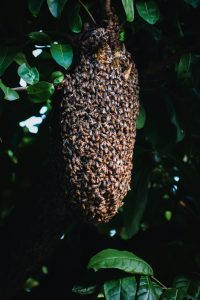
During spring or early summer, you may happen to observe a swarm of bees temporarily stopping on a tree, a hedge, a wall or in a protected crevice, or taking up permanent residence. Although the image may be impressive (a swarm can involve several thousand bees), in most cases it is not a dangerous situation.
The swarm in fact represents a natural phase in the life of bees: a part of the colony moves together with the queen in search of a new home. In this phase bees tend to be less aggressive than when they are defending a stable hive.
Swarming bees have made a large store of honey, contained in a special sac in their abdomen called the honey stomach (or honey sac), a bit like you leave for a trip and you carry along what’s necessary in a suitcase. This honey will be used, once a suitable place is found, to build new honeycombs with wax and thus create the structure of the hive, where egg-laying and the storage of nutrients necessary for the colony’s survival will resume.
In this situation of transition and abundance of resources, the bees are very focused on their goal: finding a new home, and for this reason they tend to worry little about any human observers.
In any case, as a precaution, in the presence of a swarm it is important to:
- maintain distance;
- avoid sudden movements;
- not use water, smoke or insecticides;
- keep children and pets away;
- contact a local beekeeper for possible recovery.
Many swarms, if they land in accessible places, are in fact recovered by expert beekeepers without any harm to either people or the insects.
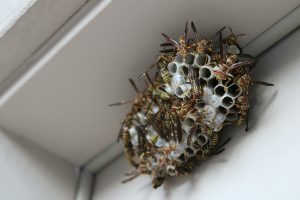
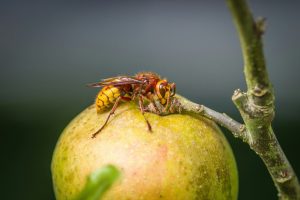
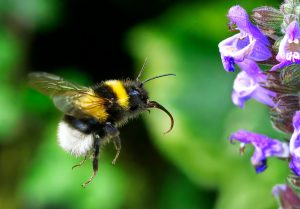
Insects with stingers are not all the same: how to recognize a bee from bumblebees, from wasps and hornets
Knowing how to distinguish bees from wasps and hornets is important for behaving correctly when encountering them. Generally speaking:
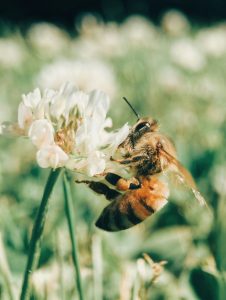
- The bee has a stockier and hairier body, with colors generally darker and less bright; it is an insect that moves in an orderly manner and is often observed while it lands on flowers to collect nectar and pollen.
- The bumblebee is often confused with the bee, but is generally larger, very hairy and with a “fluffy” and rounded appearance. It is a fundamental pollinator, active even at lower temperatures than other insects. Despite having a stinger, it is one of the most docile insects: it tends not to be aggressive and only stings if it feels directly threatened or crushed.
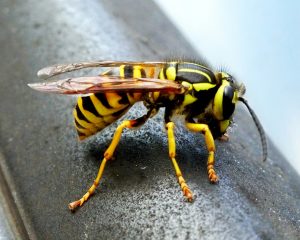
- The wasp, on the other hand, has a thinner and smoother body, with a more vibrant yellow and black coloring, and is more attracted to sugary foods and drinks, which is why it can easily approach people in outdoor contexts. Its nests are built with a sort of “paper” obtained from chewed wood fibers, grayish in color and with an irregular structure, often hidden in attics, cavities or trees.
- The hornet is larger and more robust, with a more intense hum, but is not necessarily more aggressive than wasps or bees: it tends to defend itself only if it feels threatened. Hornets also build nests similar to those of wasps, but generally more voluminous and often located in protected cavities such as trunks, bins or sheltered spaces in buildings.
In general, recognizing these differences helps to correctly interpret the behavior of insects and to reduce impulsive reactions, promoting a calmer and more respectful attitude towards nature.
Bee venom: between fear and scientific research
Bee venom has been known since ancient times for its effects and its possible applications: doctors such as Hippocrates, Pliny, Galen and Avicenna described it as a remedy for some wounds and for ailments related to joint inflammation.
It is a complex mixture of substances, composed of peptides, enzymes and other biologically active molecules. Over time, scientific research has studied some of its properties, identifying possible anti-inflammatory, analgesic and immunomodulating effects. In Italy and in other countries, study initiatives are also active in the field of apitherapy, a discipline that explores the use of hive products for the well-being of humans and animals.
Some interesting facts
The bee’s venom apparatus includes two abdominal glands, a venom sac and the stinger. The glands produce substances that are then collected in the sac and, at the time of the sting, inoculated through the stinger.
The stinger is present in worker bees and the queen: workers use it mainly for defense of the hive, while the queen uses it in internal conflicts within the colony, including against other developing queens. Very young bees and drones, on the other hand, possess neither stinger nor venom. Their apparatus fully develops in the early stages of adult life, when the bee takes on the tasks of defending the colony.
When a bee stings a person, the stinger often remains embedded in the skin along with part of the venom apparatus. This detachment unfortunately causes the death of the bee shortly after the sting, because the abdomen and connected organs are irreversibly damaged.
The benefits of bees for children’s well-being
Bees can also become an extraordinary educational tool. Observing nature, visiting educational farms or learning how a beehive works helps children develop curiosity, a sense of responsibility and respect for the environment.
Outdoor experiences also promote the emotional and cognitive well-being of the little ones. Learning to observe an insect without fear, understanding the value of cooperation within a beehive and discovering the link between nature and nutrition contributes to building a healthier relationship with the natural world.
Educating children about bee protection also means teaching them that every living being, even the smallest, has an important role in the planet’s balance.
How to teach children to coexist peacefully and safely with bees
To help children live peacefully with the presence of bees, it is useful to convey some simple rules:
- avoid waving hands near insects;
- observe bees from a distance;
- do not leave sugary drinks open outside;
- maintain calm and respectful attitudes;
- learn to distinguish between bees, wasps and other insects.
Knowledge is often the best way to transform fear into awareness.
Bees: small allies for life
WHO ( 2020) suggests some general principles on health education:
0–2 years
- Intentional exposure in environments with obvious presence of bees (e.g., beehives, beekeeping, flower fields heavily frequented by insects) is not recommended.
- The child does not have the capacity to understand the risk or react appropriately.
- Any contacts must be accidental and unpredictable, always under direct supervision.
3–5 years (preschool age)
- Possible exposure only in controlled and supervised environments (e.g., gardens, parks).
- It is important to start education: do not get agitated, do not strike the bees, stay calm.
- Avoid high-density bee contexts or beekeeping activities not structured for children.
6–10 years
- A guided educational exposure can begin, for example: educational visits to beekeepers and distance observation of beehives.
- The child is able to follow simple rules of behavior and safety.
>10 years
- Possible participation in more structured experiences (workshops, environmental education, educational beekeeping).
- Greater capacity for risk understanding and self-control.
Bees and the future of ecosystems
Bees play an essential role in the planet’s natural and agricultural balance. More than “protecting the future,” it can be said that they represent one of its fundamental conditions. Their pollination activity supports biodiversity, guarantees the reproduction of numerous plant species and contributes to the stability of food production.
For this reason they are often defined as sentinels of the environment: their presence, their behavior and any difficulties they encounter directly reflect the state of health of ecosystems.
Inside the hive, an extraordinarily complex and efficient organization is also observed, based on cooperation, specialization of roles and collective regulation. A natural system that shows how balance and interdependence are at the base of the colony’s survival. What better example of sustainability?
Knowing bees means approaching a broader reading of nature, in which every organism is connected to others. In the educational field, this allows children to develop a more conscious sensitivity towards the environment and a deeper understanding of the relationship between ecosystems, nutrition and well-being.
“Children are living beings — more of the future than of the present, yet they are the sweetest thing of the present. Like bees collecting honey from every flower.” – Rabindranath Tagore, Stray Birds (1916), aphorism 97