Chapter 10 – Pets at Home

Growing up with an animal is an experience that benefits a child’s health benefits a child’s health and behavior. Interaction with a pet—regardless of the type—helps children develop their self-esteem and sense of self-efficacy, teaches them to respect others and their needs, and generates feelings of wellness by stimulating the release of oxytocin. Oxytocin is often referred to as the “love hormone” because of its fundamental role in behaviors that mediate social relationships. This hormone is also released in the body through contact with animals. Interaction with a pet, therefore, has a very positive effect on a child’s development, as it promotes good mood and reduces stress.

The positive effects of being around animals have been widely demonstrated through various studies and clinical experiences in the treatment of certain illnesses. When used alongside other treatments, Pet Therapy has proven very effective in post-illness rehabilitation and in treating patients suffering from depression or chronic anxiety (31).

Even a newborn, with the proper precautions, can live safely near a household pet. It is important for parents to closely observe the animal’s behavior during the initial period to ensure that jealousy toward the baby is not expressed through aggressive gestures. Usually, after a few days, if the animal doesn’t feel neglected, it will accept the baby and be content to observe from a distance until it can have closer contact. However, children and animals should never be left alone together, as both may behave unpredictably.

Hygiene and cleanliness should be especially well maintained when there is a pet in the house. The pet’s health and grooming must also be taken care of through regular check-ups and treatments recommended by the veterinarian.

When choosing a pet, families should take into account various factors, such as the local climate, the size and layout of their home, and the lifestyle they intend to maintain.

Finally, when choosing a preschool or daycare center, it might be useful to know that more and more facilities are including animals as part of the educational path, complementing traditional teaching methods.

Subscribe to the newsletter

Be the first to receive the latest news from the Baby Wellness Foundation!

Chapter 9 – Community Life

An important experience for the emotional and social development of children is community life: attending a good daycare and preschool has very positive effects on their psycho-physical development. However, starting daycare can initially be a very stressful event for the youngest children (30), as they must overcome the challenge of separation anxiety. It’s quite normal for children to resist and sometimes break down in desperate crying fits: this is a sign of the quality of their attachment to their primary caregivers. Generally, however, within a few days or at most a few weeks, children form attachment bonds with the caregivers at the daycare and, under their guidance, become visibly more relaxed and confident in their abilities. They open up to relationships and become more willing to collaborate.

The adaptation period—meaning the gradual entry into daycare, with increasingly longer stays—helps them cope with the temporary separation from mom and dad in a less traumatic way. The time required depends on the child’s temperament, the caregivers’ skills, and the parents’ calmness, as they must build a trusting relationship with the staff and convey that sense of security to their child.

Subscribe to the newsletter

Be the first to receive the latest news from the Baby Wellness Foundation!

Chapter 8 – The Benefits of Play

The United Nations High Commissioner for Human Rights, with Resolution 44/25 of November 20, 1989, recognizes play as an “inalienable and non-negotiable right” of every child. Play contributes decisively to the social, physical, cognitive, and emotional development of children and to their overall wellness. Among the key elements needed for a child’s psychophysical development, play holds a fundamental place: it is the ultimate tool through which a child builds an understanding of the world and learns to relate to others.

Play allows children to actively explore and make sense of their surroundings, learn about themselves and their environment, and begin to develop early self-control and social interaction skills.

In early childhood, play and learning are inseparable: from the infant’s first sensory exploration with hands and mouth—shaking objects to hear sounds—to older children pretending to be astronauts, doctors, or wizards and inventing rules for interacting in their imaginary worlds, play literally grows the brain.

Exploring a stimulus-rich environment supports the production of brain-derived neurotrophic, a protein that acts on neurons and promotes memory development, higher thinking, and psycho-motor skills.

At first, it’s cuddles, hugs, and smiles from mom and dad that provide the most stimulating and reassuring play experiences, introducing the newborn to the world. Loving sounds and gestures nourish the relationship and help the child gain new cognitive, social, and emotional skills.

Subscribe to the newsletter

Be the first to receive the latest news from the Baby Wellness Foundation!

Between 3 and 6 months, the child begins to play by exploring their own body: they start with their hands, moving, watching, chewing them – and move on to their feet, touching and bringing them to their mouth. Gradually, they discover objects, stare at them to study their details, grab them and bring them to the mouth, or shake them to find the source of a sound. During tummy time on a soft mat, they try to reach nearby objects by stretching their arms and lifting their head. Bath time becomes an immersive play experience as they splash water and grab floating toys, often trying to bite them.

Between 6 and 9 months it’s time for peek-a-boo: a parent smiles, hides their face with their hands, then reveals it while saying “peekaboo.”

At this stage, the child starts reacting to objects disappearing and reappearing. Hiding a toy under a blanket and revealing it moments later helps them understand “object permanence”—the awareness that something still exists even when not visible. This will be crucial in coping with early separations from caregivers.

As they begin to sit up, they see the world from a new angle and use their hands and arms more efficiently. A favorite activity during this phase is emptying a container of objects and then putting them back. A classic is the “treasure basket”, filled with items of different shapes, colors, and textures that the child can explore one by one or dump out all at once, receiving varied and gratifying sensory input.

They will gradually enjoy stacking toys and puzzles that refine motor skills.

To improve coordination and help the child discover their physical abilities, “pat-a-cake” games are ideal: watching a parent clap hands and sing a rhyme brings great joy, especially when the child learns to imitate the gestures.

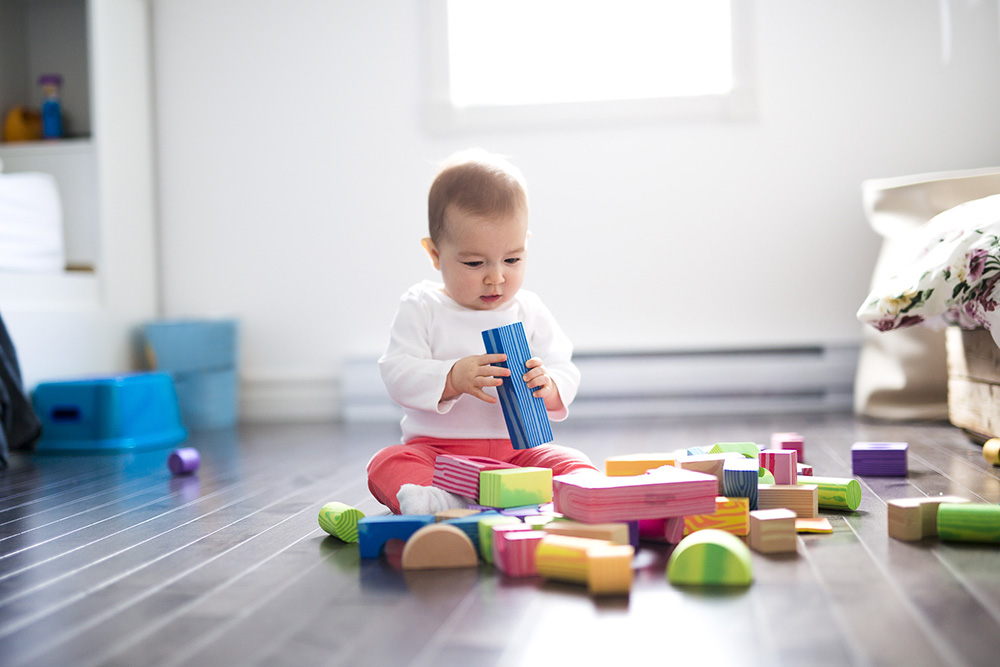
Between 9 and 12 months, block play becomes particularly beneficial (27). From basic stacking cubes to more complex building toys, they enhance motor coordination, visual-spatial skills, and abstract thinking. Children also start enjoying soft or rubber balls, sized just right for them to hold, roll, or throw.

Between 12 and 18 months, after learning to walk and refining fine motor skills, the child will enjoy push-and-pull toys, more complex puzzles, and will begin to scribble using chalk, crayons, or colored pencils with increasing control.

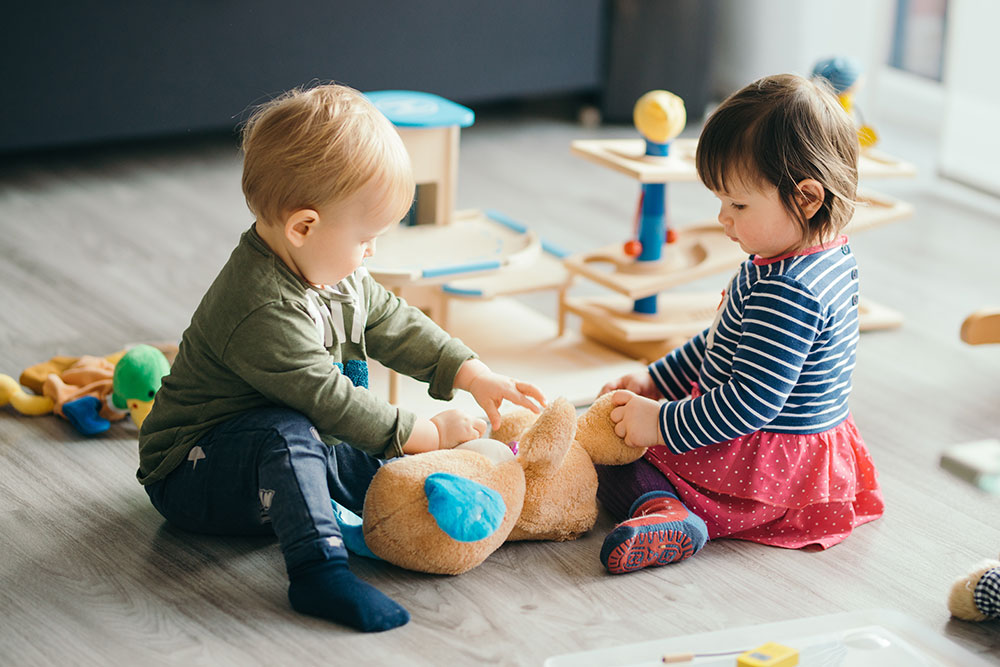
After 18 months they’ll experiment with pretend play: imagining themselves as someone else and creating scenarios with dolls and stuffed animals. Studies have shown the benefits of pretend play (28), which supports language development, empathy, reasoning, problem-solving, emotional control, open-mindedness, and creativity. This is also the time for pouring activities using flour, sand, seeds, modeling clay, and more complex building toys.

Boys and girls typically approach play in different ways (29). Boys often favor physical contact and active play, influenced both by biology and cultural norms. But no toy or type of play is inherently suited only to boys or only to girls. Both can enjoy and benefit from all forms of play and entertainment.

Chapter 7 – Laughing Heartily

“Humor offers a precious ability to respond to the complex challenges children have to face,” says Mary Kay Morrison, author of the book Using Humor to Maximize Living (26). Research conducted by the educator shows that laughter increases adrenaline and oxygen flow, releases feel-good endorphins, and raises heart rate. Much like a good workout, this “burst” of energy turns into a feeling of relaxation and calm.

But it is more than just a simple sensation. In fact, other studies show how humor can help us become more skilled at solving problems and making decisions. Brain scans reveal that humor sparks creativity and supports critical thinking. “Humor is an essential element for healthy brain development, in both children and adults,” says Morrison.

Furthermore, humor can represent a defense mechanism our bodies need to become more resilient in the face of adversity. Being able to laugh during life’s challenges can actually help us manage our emotional wellness.

You can begin developing a child’s sense of humor very early. The giggles that arise when a parent plays peek-a-boo or makes funny noises together with the baby help them grow and learn. These are actions that promote brain connections—the building blocks of future social skills.

Being able to understand the funny side of a situation requires the child to make conscious connections between different elements. Parents can help children develop these kinds of associations as they grow.

Adults who demonstrate and reinforce the value of humor also teach their children to appreciate it. A falling object or a squeaky toy plays its role, but what truly helps children understand humor is the active participation of adults in the fun.

So, seeing mom dance or dad clumsily trying to bake a cake can trigger a chain reaction that gets everyone laughing—greatly benefiting the family atmosphere.

Subscribe to the newsletter

Be the first to receive the latest news from the Baby Wellness Foundation!

Chapter 6 – Emotional Development

Speaking directly to the baby, looking into their eyes, talking to them—even before they understand the meaning of words—not only supports language development. It also has deeper effects: it activates the so-called mirror neurons, the area of the brain responsible for imitation and empathy, the foundation of all social and emotional skills (21).

From the very first weeks of life, babies show a greater preference for human faces over inanimate objects. Among faces, they prefer those with open eyes and smiling expressions. They soon learn to smile by imitation.

This mechanism allows parents and caregivers to act as emotional guides for the child’s development. It is a crucial task: although some core emotions are innate and rooted in the brain’s structure, without the example and guidance of an adult the child cannot recognize and manage them alone.

At the heart of it all is the attachment between the child and their caregivers (22)—not only the mother, as long believed, but also the father, grandparents, babysitter, and daycare educators. If the adult is emotionally available, meaning they pay attention to the child’s needs, make an effort to understand their cues, and respond promptly, the child feels protected and nurtured and develops what psychologists call secure attachment. On the contrary, if their needs are ignored, they experience stress, which interferes with the function of the hippocampus, the brain area involved in emotional regulation, and they learn not to trust their caregivers, eventually forming an insecure attachment.

I Children with secure attachment explore their environment confidently as long as they have a caregiver nearby. They react poorly to separation but are quickly comforted when reunited. As they grow, they gain better emotional control, resulting in improved focus and social skills.

Children with insecure attachment, may show various reactions when separated from caregivers: indifference followed by coldness when the caregiver returns, or desperation during separation followed by anger when reunited. Insecure attachment interferes with emotional regulation and social development.

Subscribe to the newsletter

Be the first to receive the latest news from the Baby Wellness Foundation!

All children experience negative emotions like frustration or anger at times. To learn how to handle them, they need the guidance and example of adults (23).

Adults should not stigmatize these feelings, but welcome them, helping children recognize the emotions and instead disapprove of the negative behaviors that may arise. In other words, a child should not feel “wrong” or “bad” for experiencing anger or frustration, but they should learn not to express those feelings in harmful or destructive ways. It is up to caregivers to offer “alternative routes” for emotional expression. First and foremost, this means providing a harmonious family environment capable of containing and supporting emotions, both positive and negative. Children must learn to deal with difficulties, but they also need tools to manage the emotions that follow. Their emotional wellness as adults will largely depend on early childhood experiences in this area.

Like anger and frustration, fear is also an innate emotion, deeply embedded in the human psyche for evolutionary reasons, and children must learn not to be ashamed of it. With support from their parents, fear should be managed effectively—not denied or ridiculed (24).

To help overcome fears like the dark or imaginary monsters in the bedroom at night, the child needs to learn to distinguish between fantasy and reality and to control emotional impulses—an ability that takes years to develop. The right way to support this development is to listen to the child’s fears, show them there’s nothing to worry about under the bed or in the closet, and comfort them through physical closeness, voice, and perhaps a cuddly toy to hug in bed.

In addition to fears about real or imagined threats, young children also experience another primal emotion shared by all young mammals: separation anxiety (25). It typically appears between 6 and 12 months of age and can persist in a milder form up to 3 years. It may involve episodes of panic when the child is separated from a caregiver. Separation anxiety is a physiological and evolutionarily understandable reaction: our ancestors lived in dangerous environments, and a child wandering away from adult supervision risked encountering predators. It is no coincidence that this form of anxiety appears when children begin to gain autonomy—crawling or walking—and engage in social contact. As the child grows, separation anxiety usually fades, but it can reappear during major life events such as starting daycare or the birth of a sibling.

In these moments, it is crucial for caregivers to continue offering close support and special attention.

Chapter 5 – First Words and Language Development

Words are not the only way we communicate. Gestures, facial expressions, and looks allow us to express feelings and moods very effectively. It is through body language that the newborn begins to interact with parents in the first months of life, accompanied by unarticulated vocalizations and crying. These are their first tools to attract the attention of mom and dad and to communicate their needs. Just like motor development, there is no precise age when a child begins to babble, i.e., to pronounce syllables made of vowels and consonants like ma-ma-ma or pa-pa-pa, or to say their first meaningful words. Rather, there are wide time windows and a great margin of variability depending on the child’s individual predisposition and exposure to environmental stimuli, primarily the encouragement from parents.

In the first months the baby does not communicate intentionally. When crying or reaching out towards something they want, they are simply expressing their needs using the skills they have already developed. However, when mom or dad responds to these cues, they reinforce the baby’s confidence that their actions will get a response. This gradually teaches the child to make intentional gestures (deictic gestures), aimed at another human being. The baby will extend their arm, opening and closing their hand to show they want something. They may also show or hand an object to the adult, or point to something they can’t reach.

Around 6 months many babies begin to understand the meaning of certain frequently repeated words in specific contexts, such as “water” when offered a bottle. Between 4 and 10 months, many begin to babble intentionally, and by 10 months, over 50% of babies say their first intelligible word, though about 25% reach their first birthday without yet uttering one (17).

Subscribe to the newsletter

Be the first to receive the latest news from the Baby Wellness Foundation!

The transition from babbling to first words is gradual and often depends on how parents interpret it (18): for example, if the baby says “be-be-be” while pointing at the bottle, they may be babbling or attempting to say “bottle.”

How can language development be encouraged?

While babies are innately predisposed to language, to fully express their potential they need to be immersed in a “sound bath”—not just words, but also conversation, noises, singing, and laughter. They won’t learn to speak passively by listening to adult monologues or by watching adults talk on screens. They need stimulating and engaging conversations with their caregivers (19).

The more a child is encouraged to engage, the faster the learning process will be. Here are some practical tips parents can start using right away:

  • Speak to the baby in a loving tone while maintaining eye contact throughout the interaction. This keeps the baby engaged and “tuned in” with the parent, responding with vocalizations and movements.
  • Narrate daily activities using simple phrases, exaggerating certain sounds (e.g., extending vowels: “Here comes the paaapaaa,” “so much peeepeee”) to capture attention.
  • Play together using everyday sound-making objects (spoons, lids, etc.).
  • Assign sound labels to specific objects and emphasize them (20) (e.g., “vvrr” for the washing machine spin cycle, “ding” for the microwave, “boom” for a cabinet closing). However, be careful not to replace words with these labels—say “the washing machine goes vvrr,” not “the washing machine is called vvrr.”
  • Imitate pleasant environmental sounds with your voice: the patter of rain on the windows, birds chirping, the babbling of a stream, the rustling of leaves in the wind.
  • Sing single syllables (/ba/, /ma/, /la/…) or hum sounds like /mmm…/ rather than full words.
  • Sing lullabies, nursery rhymes, or “their song”—a made-up song just for them.
  • Expose them to a variety of musical genres (classical, jazz, country, etc.); don’t limit them to just “children’s music.” Share the listening experience with gestures and facial expressions.
  • Offer small sound-producing objects and instruments (e.g., soft musical books), which the child can actively explore by shaking, rubbing, or banging.

Chapter 3 – Sensory Development

Just like the neural connections that control innate reflexes, the senses are already formed when the baby is born. Some are already sharply active, while others still need to mature, adjusting to the stimuli of the external environment.

The first sense the fetus develops in the womb is the sense of touch. This is demonstrated by ultrasound images: the baby plays with its hands, feet, and umbilical cord and responds to the mother’s touch on her abdomen (5).
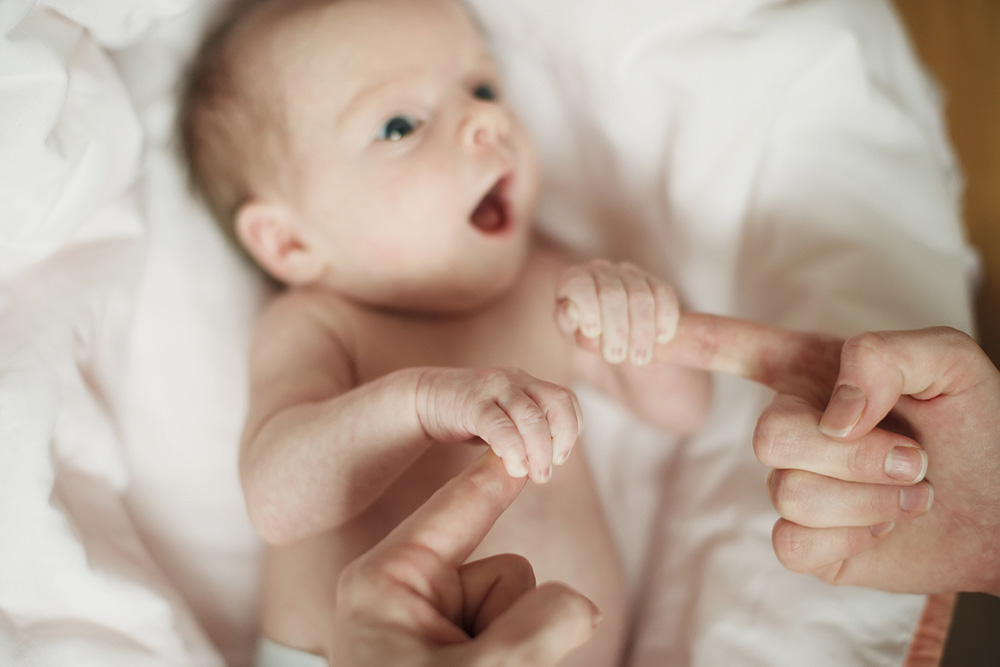
From the very first days of life, the baby explores objects through touch and creates a mental representation of them, to the point that they recognize as familiar those they have already examined (6).

But the sense of touch for a baby is much more than a tool for understanding their surroundings: it is closely connected with the brain centers from which emotions and ancestral mechanisms of social behavior originate. A newborn who frequently experiences skin-to-skin contact with the mother, who is caressed and hugged, feels safe and relaxes their defense mechanisms. Their cortisol levels—the stress hormone—are lower, while serotonin levels, which promote well-being, are higher.

Hearing
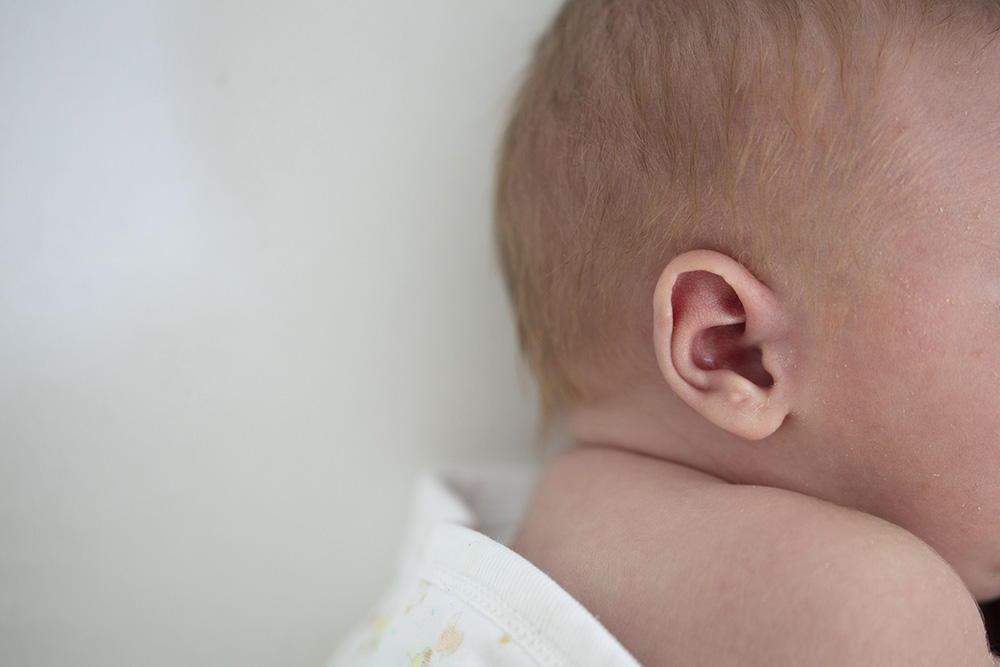
Unlike vision, hearing is already developed and functioning during pregnancy. The fetus can perceive some external sounds (8), including the mother’s and father’s voices, which they learn to recognize. After birth, hearing those familiar voices has a calming effect.

In the first few weeks of life, the baby cannot yet distinguish words from background noise (9). Speaking to them in “baby talk”—with elongated vowels and higher-pitched tones—helps them focus on words and stimulates the development of auditory areas in the brain, which will soon enable them to speak in return.

By around 2 months the baby’s hearing has developed enough to begin distinguishing different tones. By 3–4 months, the baby can locate the source of a voice or sound and turn toward it. They also begin to vocalize consonants and vowels. Around 5–6 months, they start to understand that some sounds are caused by their own actions—such as dropping objects to hear the noise they make, which often delights them and provokes loud laughter.

To assess whether a baby has healthy hearing, simple stimuli can be used—for example, lightly clapping hands in one direction to get their attention. If the baby turns toward the sound, there are likely no issues. If they don’t respond to any stimuli, it could indicate a hearing problem.

In that case, it is advisable to consult the pediatrician to diagnose and address the issue promptly.

Subscribe to the newsletter

Be the first to receive the latest news from the Baby Wellness Foundation!

Taste and Smell

These two senses develop in parallel during pregnancy and are already highly acute at birth.

Smell is closely connected not only to taste but also to emotions, making it crucial to the baby’s psychomotor development, beginning with the bonding process with the mother in the early days of life.

At birth, the newborn’s well-developed sense of smell allows them to recognize their mother even before they can see her, guiding them toward the breast.

After the first contact with the mother, the baby also learns to recognize the smell of her milk, which studies show they prefer over formula or the milk of other women (10). They can even distinguish caregivers by their scent. The intimate connection between smell and emotion also explains how this sense strongly influences memory. Scents associated with early experiences will remain closely tied to those emotions, to the point where a familiar smell can trigger emotional reactions even years later.

Regarding taste, the baby experiences the flavors of the foods the mother eats through the amniotic fluid during pregnancy. Being exposed to a healthy, varied diet from the womb will later make the baby more open to accepting those same flavors during weaning.

By nature, in the first months of life, babies particularly enjoy sweet and umami (savory) flavors, such as the taste of glutamate—a component of breast milk. They show expressions of disgust when tasting bitter or sour flavors and are indifferent to salty ones. These instinctive preferences are evolutionarily driven, designed to steer babies away from potentially toxic plants and substances and toward energy-dense foods.

In today’s society, where calorie-dense sweet foods are abundant and the biggest risk is often overweight rather than undernourishment, these preferences can be problematic for parents. Moms and dads will need to work patiently and consistently to educate their children to follow a healthy and varied diet, rich in vegetables and fiber. Over time, with exposure and example, children will overcome their natural resistance to new flavors and become more willing to try a wider range of foods. (11).

Vision

Vision plays a fundamental role in a child’s physical, psychological, and emotional development from birth, although full visual maturity is only reached around eight months of age.

The eyes, optic nerve, and visual cortex—the brain region responsible for receiving and decoding visual signals—begin developing early in pregnancy and are ready to function at birth. However, they need external stimulation to become active and fully mature (12).

A newborn’s vision is blurred, as if surrounded by a thick fog. They can perceive light and dark and some large shapes at close range, such as the mother’s face, but not distant objects or fine details. Their color perception is limited, and their eyes sometimes move in an uncoordinated way, which can resemble strabismus. This is a normal and temporary phenomenon, as their eye muscles are not yet fully controlled.

At 15 days old the baby starts distinguishing shapes more clearly up to 20–30 centimeters away (13). Around one month, eye movements become more coordinated, allowing the baby to focus and roughly track moving objects. By two months, they show a preference for bright colors and high-contrast images (e.g., black and white or light vs. dark tones), and color differentiation begins to sharpen. Over the following months, they become increasingly able to distinguish object details and images. At 3–4 months, the baby develops the fixation reflex, the ability to focus on and follow an object that draws their attention—and begins recognizing facial features and expressions, soon imitating them. They increasingly coordinate their eye movements and follow moving objects with greater accuracy. From four months onward, better control of movement is paired with growing depth perception.

Around 5 months the baby’s visual horizon expands, and they begin to focus on more distant objects. The ability to distinguish colors also becomes fully developed at this stage. Three-dimensional vision, depth perception—develops later, around the first year of life, as the child begins to walk. By twelve months, their visual ability matches their increasing motor skills: walking and moving independently helps refine their spatial awareness. By age 2 they have full control of their eye muscles and by age 4, their visual acuity is comparable to that of an adult.

Chapter 2 – Innate Reflexes

At birth, a baby’s nervous system is not a blank slate. It has had nine months to develop during intrauterine life, following a model shaped by hundreds of thousands of years of evolution. Through the mother’s body, it has already come into contact with the environment it will need to adapt to. Certain connections in the nervous system enable the baby to perform involuntary movements that are essential for survival and adaptation. At the same time, they are signs of healthy development: these are innate reflexes (3).

The neonatologist checks for their presence during the baby’s first hours of life, while the pediatrician monitors them throughout the child’s growth. Over the months, these reflexes—regulated by the peripheral nervous system—gradually fade as the brain matures, making way for voluntary movements. The first action a newborn must perform at birth is, naturally, to breathe. Through the first cries, air enters and expands the lungs, activating autonomous respiration. From this moment, heart-lung circulation begins: the heart rate can reach 180 beats per minute. Several other reflexes must also be present at birth. The main ones can often be recognized by parents (4):

  • Moro Reflex
    When a newborn is laid on a flat surface and gently lifted a few centimeters with one hand supporting the head and the other the shoulders, then suddenly released with a quick motion, the baby reacts to the sensation of falling by spreading their arms, as if trying to find a wider support to maintain balance.
  • Sucking Reflex
    When the baby’s cheek is gently stroked, they turn their head, attempt to reach the finger, and open their mouth to suck. This reflex helps the baby orient themselves and find the mother’s nipple when brought to the breast.
  • Rooting Reflex
    Also called the Search Reflex. This reflex is often assessed along with the sucking reflex, as both are functionally related to feeding. It helps the baby locate their food source, and the sucking reflex then allows ingestion of milk. Head-turning associated with this reflex is also seen in other reflexes such as head-righting and body-righting. If the reflex persists or is absent, it may signal dysfunction in the central nervous system or the sensory-motor system. The response is triggered by gently tapping the area near the lips, causing the head to turn toward the stimulus.
  • Crawling Reflex
    When placed on their stomach, a newborn will tuck their legs under the body and begin to crawl forward. This reflex is usually observed within the first 30 minutes after birth when the baby is placed on the mother’s abdomen and gradually “climbs” toward the breast.
  • Babinski Reflex
    This reflex is normally observed from birth and typically persists until about six months of age. It occurs when the sole of the foot is stroked, causing the baby to fan out their toes and then curl them back in. The Babinski reflex is a reliable test for dysfunctions in the pyramidal tract, an indicator of voluntary movement capacity. However, spontaneous or overly sensitive activation may indicate irritability and should be considered pathological.

Subscribe to the newsletter

Be the first to receive the latest news from the Baby Wellness Foundation!

  • Palmo-Mental and Palmo-Mandibular Reflexes
    These reflexes are present at birth and trigger facial responses when the palms are stimulated. The palmo-mental reflex is observed when applying simultaneous pressure to both palms, which may cause one or more of the following: mouth opening, eye closing, neck flexion, or head tilting forward. The palmo-mandibular reflex occurs when lightly scratching both palms causes the lower jaw to open and close. These typically disappear around three months of age. Some experts believe the palmo-mental reflex is shared with certain animals, helping infants cling to their mothers while feeding.
  • Palmar and Plantar Grasp Reflexes
    When a finger or object is placed in the baby’s open palm (from the pinky side), they will grasp it. A similar response occurs when pressing the sole of the foot near the base of the toes. After the third month, this reflex tends to disappear and is replaced by voluntary grasping.
  • Stepping Reflex (Walking Reflex)
    When held upright under the arms with feet touching a flat surface, the newborn will start moving their legs alternately, mimicking walking. This doesn’t mean the baby can walk yet, but rather the nervous system is practicing the connections and muscle coordination needed for future walking.
  • Tonic Neck Reflex
    When the baby is lying on a flat surface with arms and legs close to the body, gently turning their head to one side causes the arm and leg on that side to extend. This reflex likely evolved as a protective mechanism to prevent the baby from rolling over if the surface tilts.
  • Blink Reflex
    The baby closes their eyes in response to a loud sound or bright light. This is a protective reflex that will accompany us throughout life.

Chapter 1 – The Harmonious Development of the Child

lo sviluppo armonico del bambino

The first years of a child’s life are a whirlwind of discoveries and achievements. From the moment they are born—when they seem to do nothing but sleep, eat, cry, or look around with wide eyes—they grow stronger, refine their senses, complete the development of their still-immature nervous system, absorb information from the world around them, are nourished by the love of those who care for them, and learn to interact with objects and people, to move, and to communicate. Now more than ever, mom and dad are a fundamental point of reference.

According to Thomas Berry Brazelton, pediatrician and child psychiatrist, “the task of parents is not to compare the characteristics of their newborn with those of another child, but to observe, listen to, and follow the unique lifestyle of their own child.” Since the 1950s, Brazelton dedicated his life to understanding neonatal and infant behavior and supporting the parental role. According to the expert a child’s development is a complex process, with no exact stages or skills strictly tied to age. It is marked by moments of rapid growth and inevitable regressions. Each child experiences development in their own way, based on their individual traits, temperament, family history, and the type of support they receive. This is why comparing children is meaningless. At the same time, it is crucial to support parents. In order to build a connection with their child, Brazelton stresses that parents must observe them and trust their instincts. Infants are fully capable of expressing themselves in various ways and reacting to adult interaction (in turn influencing it), thereby creating unique communication patterns.

A calm parent, who is able to observe their child and build a relationship with them, will know how to support them in their developmental progress — even through the inevitable phases when the child seems to regress. Brazelton defined as “touchpoints” those crucial developmental moments when a child’s behavior becomes disorganized just before a major developmental leap, and when parents may feel confused.

Subscribe to the newsletter

Be the first to receive the latest news from the Baby Wellness Foundation!

Motor, cognitive, and emotional developments are far from linear: Each progress is typically preceded by a brief but predictable phase of disorganization or regression. This is completely normal: every new milestone comes with a “cost”—for the child as well as for the family. Learning to walk, for example, is a physically and emotionally demanding time for a child. Alongside the excitement of a new achievement comes the fear of detaching from the parent, while the surrounding environment becomes a wondrous place to explore—but also one full of potential dangers. Suddenly, the child may no longer fall asleep on their own, may wake more frequently at night, or cry when their mother walks away.

When the child finally manages to walk, they feel fulfilled, solidify what they have just learned, and the entire family can begin to seek a new balance. In these phases—which can be exhausting for parents and may even cause them to question their role—the support and guidance of the pediatrician is essential, helping them to see changes from a new perspective and to activate the resources they already possess in a different way.

Psychomotor development is the result of a process that, over time, involves the simultaneous development of sensory, motor, cognitive, emotional, and relational skills. When a child reaches a new motor milestone—such as learning to crawl—they experience sensations and encounters that help them mature in all aspects.

Psychomotor development occurs in ways and at a pace that can vary greatly from one child to another.

Conventionally, it is divided into four age-based phases: 0–3 months, 3–6 months, 6–9 months, and 9–12/18 months. Each phase involves the development of specific skills. This process is strongly influenced by endogenous factors, such as genetics, physical constitution, and temperament. However, it is also greatly impacted by exogenous factors — particularly the relationship with parents and the stimuli received from the surrounding environment. In recent years, neuroimaging studies have increasingly confirmed this view, showing how synaptogenesis processes—intensely active in the first months of life—are significantly modulated by external stimuli.