
Contrary to the common belief that the newborn is a passive being, limited to basic functions such as feeding and crying, current scientific evidence demonstrates that newborns possess a remarkable repertoire of competencies already at birth. These abilities are essential for survival, adaptation to the external environment, and the development of emotional bonds with their primary caregivers.

Motor Competencies and Reflexes at Birth
At birth, the newborn displays motor activity that is predominantly regulated by primitive reflexes (or archaic reflexes), innate neuromotor automatisms that represent a fundamental stage of development. These reflexes, active from the very first days of life, gradually diminish between the third and sixth month as voluntary motor skills emerge. Their presence therefore represents an important indicator of neurological maturation.
- Stepping reflex: when the newborn is supported in an upright position, alternating stepping movements resembling walking are elicited. This reflex is considered functional during passage through the birth canal.
- Moro reflex: in response to a sudden movement or stimulus, the newborn first extends and then retracts the arms and legs, contributing to the initiation of breathing at birth.
- Sucking reflex and rooting reflex: essential for autonomous feeding, these reflexes enable the newborn to locate the breast and latch on.
- Palmar grasp reflex: when the palm of the hand is stimulated, the newborn closes the hand around the object. This may represent an evolutionary adaptation that once promoted physical attachment to the caregiver.
Visual Perception in the Newborn

Scientific evidence demonstrates that, as early as the first week of life, newborns are able to distinguish between different visual stimuli and show a preference for those that are more complex and variable rather than uniform stimuli. Although the newborn’s visual system is still developing, it provides sufficiently clear vision of objects positioned at an optimal distance of approximately 20 centimeters—the distance between the mother’s face and the infant’s face during breastfeeding.
From the very first days of life, newborns are able to voluntarily fix their gaze on an object, orient both their head and eyes toward it, and visually track its movement. By just three days of age, studies have observed a greater attraction to moving stimuli than to stationary ones.
According to Daniel Stern, many of the earliest mother–infant interactions occur precisely at this optimal distance of 20 cm. In this context, newborns are particularly attracted to stimuli characterized by strong visual contrast, clearly defined contours, and movement, all of which facilitate relational engagement. Stern hypothesized that newborns are biologically “designed” to actively seek visual stimulation without becoming overstimulated, demonstrating an early predisposition for social interaction.
Although color discrimination emerges only around the seventh or eighth week of life, newborns are nevertheless sensitive to minimal variations in light contrast, as small as 20%.
As observed by Hainline, although newborns are not yet able to focus on objects located at varying distances during the first days of life, they possess sufficiently sharp black-and-white vision to recognize stimuli positioned within approximately 25 cm of their face.
Overall, these studies indicate that, from birth, newborns possess the functional foundations necessary to process visual stimuli and engage in the earliest forms of interpersonal communication.
Auditory Perception and Musical Sensitivity
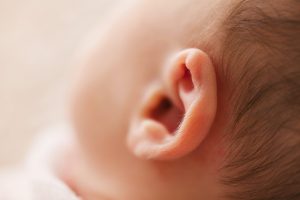
From the very first hours of life, newborns demonstrate remarkable auditory sensitivity. They are able to recognize their mother’s voice and orient their gaze toward it. When they identify the face of the person who has spoken, coordinated responses can be observed: the gaze becomes more focused, the neck extends, and the chin slowly moves toward the speaker. These responses indicate an early activation of communicative competencies.
During the first two days of life, newborns are also able to distinguish between two different syllables after less than twenty minutes of exposure, demonstrating an early capacity for phonological learning. Auditory learning, however, begins well before birth. Newborns between 12 and 72 hours of age show differential responses—for example, changes in eye opening—when exposed to speech in their mother’s native language compared with speech in a foreign language. This confirms that the intrauterine environment plays a key role in familiarizing the fetus with the prosodic characteristics of language.
Musical abilities are equally remarkable. In a study involving eighteen newborns between 24 and 48 hours of age, infants underwent functional magnetic resonance imaging (fMRI) while listening to pieces of classical music, some of which contained intentional musical dissonances. The results revealed distinct patterns of brain activation: the “incorrect” music activated specific regions of the right hemisphere, the same areas involved in expert adult listeners during music perception. These findings suggest that the human brain is endowed from birth with a neurofunctional predisposition for musical perception, capable not only of processing melodies but also of recognizing alterations within them.
Olfactory Perception and Sensory Memory

Within the first two weeks of life, newborns are able to recognize and distinguish their mother’s scent from that of another person, particularly during breastfeeding. This early olfactory ability is made possible by the intrauterine development of the olfactory system, which begins very early in gestation. Olfactory receptors start to develop from the fifth week of fetal life, while the nostrils are formed around the fifteenth week. During its time in the amniotic fluid, the fetus is exposed to numerous chemical stimuli that contribute to the formation of a true prenatal olfactory memory. This process enables the newborn, at birth, to recognize the mother’s scent and independently orient toward the breast.
The sense of smell therefore plays a crucial role in postnatal adaptation, emotional regulation, and the activation of feeding behavior. Studies have shown that familiar odors, such as the mother’s scent, can significantly help soothe newborns in situations of distress. Objects carrying the mother’s scent, for example, are often used in clinical settings to facilitate self-regulation in preterm infants or during periods of temporary separation.
Thanks to their highly developed sense of smell, newborns placed on their mother’s abdomen are able to orient themselves toward the breast and begin sucking. From the very first hours of life, they express their reactions to perceived odors through facial expressions, head movements, and physiological changes (such as variations in heart rate), distinguishing between pleasant odors and those that are new or unpleasant.
Early Imitation Abilities
From the very first hours of life, newborns display an early capacity for imitation, closely linked to a cognitive function known as amodal perception. This process consists of the ability to integrate information from different sensory channels—visual, auditory, and tactile—and to transfer a perceptual experience from one modality to another. Amodal perception underlies the development of a coherent representation of the self and others, laying the foundation for the earliest forms of social communication.
Within just a few hours after birth, newborns are able to imitate simple facial movements, such as opening and closing the mouth or pursing the lips, when these gestures are performed by an adult positioned approximately 20 cm from their face—the optimal distance for visual engagement. This behavior is attributed to the activation of mirror neurons, a neural system responsible for imitation and for understanding the actions of others.
By three weeks of age, newborns demonstrate the ability to imitate vocalizations, but only when the sound is congruent with the observed articulatory movement. Imitation is significantly less evident when the perceived sound does not correspond to the adult’s facial movements.
By six weeks of age, this ability becomes even more refined: newborns look longer at a face articulating the same vowel they are hearing and are able to reproduce observed facial expressions, such as tongue protrusion or mouth opening, demonstrating an increasing integration of visual and auditory perception.
Emotional Expression in the Newborn
Newborns communicate their emotional states primarily through nonverbal channels, particularly body language and facial expressions. Emotions emerge in response to environmental and relational stimuli and are expressed through recognizable signals:
- Fear: crying, trembling, tense facial expressions;
- Anger: facial flushing, irregular breathing, screaming;
- Well-being and love: relaxed facial expression, steady and calm gaze, expressions of serenity.
During spontaneous interactions with their mother, newborns display specific affective behaviors such as:
- prolonged eye contact with the mother’s face,
- social smiling,
- arm-opening gestures and expressive facial movements.
When the mother adopts an immobile and expressionless behavior (as in the still-face paradigm), the newborn displays clear signs of distress and relational disorganization, including:
- gaze avoidance,
- reduced smiling,
- closing of the mouth,
- facial muscle tension,
- self-soothing behaviors such as touching the face or clothing, yawning, grimacing, and chewing movements.
These signals represent the newborn’s attempts to re-establish relational connection and regulate their internal emotional experience in the absence of affective feedback from the adult.
