Information at your fingertips: why it matters
When buying products for newborns, it’s natural to focus on colours, shapes and patterns: choosing beautiful and visually pleasing garments is part of the joy of caring for a baby. However, the true value of a textile product for infants goes beyond aesthetics. The most important message is hidden in the information provided on the label.
A bodysuit, sleepsuit or blanket is not just an object: it is a material designed for direct and constant contact with the thinnest and most sensitive skin that exists. Understanding which fibres it is made of, what treatments it has undergone and how it should be washed or handled is essential to ensure the newborn’s safety, comfort and wellbeing.
As consumers, we are used to reading detailed labels on all kinds of products: appliances, food or cosmetics, where ingredients, instructions and warnings guide us toward safe, informed choices. The same principle applies to textile products: knowing the characteristics of the materials helps assess whether a garment is suitable for a baby’s delicate skin and physiological needs.
The starting point is knowing which information the manufacturer is required to provide and learning how to interpret it correctly. Only then does choosing fabrics become an informed gesture, capable of combining beauty, safety and comfort.
EU Regulation No. 1007/2011: the legal foundation
The main legal reference in Europe for the fibre composition of textile products is Regulation (EU) No. 1007/2011, in force since 2012. This regulation establishes:
- Which fibres may be indicated with a specific name
- The obligation to state the fibre weight percentages in the product
- The correct denomination of fibres, to avoid misleading or ambiguous definitions
What does this mean in practice?
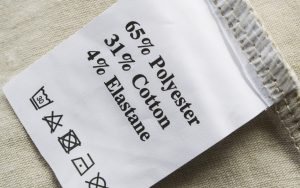
For a baby garment, such as a cotton bodysuit:
- The label must state 100% cotton (or indicate the percentage if the garment is a blend).
- If the garment contains elastane, the percentage must be clearly stated: for example, 95% cotton, 5% elastane.
- The order of the fibres must be in decreasing weight.
Obligations for manufacturers and sellers
- Provide labels that are legible, durable, visible and in the language of the country of sale.
- Use only fibre names recognised by the regulation.
- Indicate non-textile parts of animal origin with the wording: “Contains non-textile parts of animal origin”.
This regulatory framework ensures transparency, helpful both for professionals and for families concerned about the newborn’s safety and comfort.
Nomenclature and commercial names: a detail not to be underestimated
The nomenclature of textile fibres is an important indicator of the quality and function of the fabric. Regulation (EU) No. 1007/2011 requires manufacturers to use only the official terms listed in Annex I.
Examples:
• “Nylon” is not correct → the official term is Polyamide
• “Lycra” is a commercial name → the correct indication is Elastane
A label that does not comply with these rules may raise doubts about the product’s transparency and quality.
Beyond composition: other mandatory information on the label
Textile labels also provide other essential information to ensure safety, traceability and proper care.
- Responsible for placing the product on the market: each garment must include the name of the manufacturer or distributor.
- It allows quick identification of the product’s origin.
- It is an indicator of reliability and regulatory compliance.
- Country of origin: stating the country of origin is mandatory.
-
- It helps understand where the garment was actually produced.
- It supports traceability, essential for products intended for newborns.
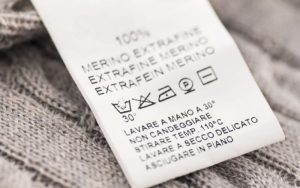
- Care instructions: information on washing, drying, ironing and professional cleaning is essential.
Why it matters:
-
- Hygiene and safety: proper washing removes residues and bacteria.
- Garment preservation: prevents damage or premature wear.
Maintenance information includes international standard symbols for washing, drying, ironing, bleaching and professional cleaning, possibly accompanied by additional indications such as the maximum washing temperature or advice on the use of gentle detergents.
Why this information matters
The data shown on the label, together with the fibre composition, provides everything needed to ensure safety, traceability and proper garment care.
For newborns, with extremely delicate skin, reading and correctly interpreting the label is a key step in ensuring protection, comfort and daily wellbeing.