
During the summer season, newborns and infants may accidentally come into contact with organisms present in natural environments, such as the sea, lakes, rivers, and green areas. Jellyfish, fish equipped with venomous structures, sea urchins, insects, and other arthropods can cause local skin manifestations which are generally self-limiting, but in children in their first twelve months of life require prudent and appropriate management based on the physiological characteristics of their age.
Newborns and infants are characterized by skin that is still maturing, with a thinner stratum corneum compared to adults, an incompletely developed epidermal barrier function, a different surface lipid composition, and a skin immune response that is still evolving. These conditions result in greater susceptibility to irritants, to toxic substances contained in animal venoms and to inflammatory processes resulting from contact with environmental organisms. Furthermore, the body surface area-to-weight ratio is higher than in adults, and the ability to communicate pain, itching, or systemic symptoms is limited. For this reason, even an apparently localized reaction must be observed carefully, especially when it involves the face, eyes, hands, genitals, or large skin surfaces.
The prevention constitutes the first level of protection. In the first months of life, contact with natural environments must always take place under adult supervision, prioritizing controlled areas, monitored waters, and environments where it is possible to reduce the risk of accidental exposure.
Jellyfish and stinging marine organisms
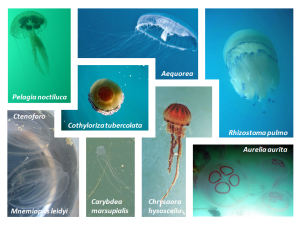
Jellyfish belong to the group of Cnidarians and possess specialized cells called cnidocytes, containing microscopic structures named nematocysts. These organelles allow the animal to defend itself and capture prey through the release of filaments capable of inoculating toxic substances into the organisms they come into contact with.
When a tentacle comes into contact with the child’s skin, the nematocysts can activate, releasing molecules with neurotoxic and inflammatory activity. The biological response involves the stimulation of cutaneous nerve endings, and the release of mediators such as histamine and other inflammatory substances responsible for the local symptoms.
The most frequent manifestations include:
- immediate burning pain
- burning sensation
- erythema
- edema
- wheals
- linear or figured lesions corresponding to the area of contact with the tentacles.
In infants, pain can be recognized through behavioral changes such as sudden crying, irritability, agitation, difficulty calming down, sleep disturbances or temporary refusal of feeding. In some cases, systemic manifestations may appear, such as breathing difficulties, pallor, vomiting, altered state of consciousness, hypotonia, or generalized allergic reactions. The appearance of these symptoms requires urgent medical evaluation.
Management of contact with a jellyfish
The procedure to follow in case of contact with a jellyfish includes a series of steps listed below:
- remove the child from the water, to stop contact with the marine organism and avoid further exposure.
- avoid rubbing the skin, because mechanical trauma can favor the rupture of nematocysts remaining on the skin surface, increasing the release of irritating substances.
- remove any tentacle fragments carefully, using gloves, tweezers, or rigid tools, avoiding direct contact with the adult’s skin.
- rinse initially with seawater, and not with fresh water, as osmotic variations can favor the activation of residual nematocysts.
- apply controlled local heat after removing the residues, using warm water at a safe temperature compatible with infant skin. This can contribute to pain reduction through the inactivation of some toxin components.
In infants, particular attention must be paid to the water temperature to avoid burns. Traditional remedies lacking adequate scientific evidence must be avoided, such as applying urine, alcohol, ammonia, or irritating substances. The use of sand or abrasive materials to remove residues must also be avoided.
Venomous fish and marine stings
Some marine species possess anatomical structures capable of inoculating venom through spines or stingers. Among these, the weaver fish is one of the species most frequently involved in accidents in the Mediterranean marine environment.
The venom is introduced through the penetration of the dorsal spines and causes a response mainly characterized by intense pain, often immediate, associated with edema, redness, and increased local sensitivity. In infants, pain may manifest as persistent crying, agitation, feeding difficulties, or changes in usual behavior.
The management involves:
- removal of the child from the water
- observation of the affected area and assessment for any foreign bodies
- application of controlled local heat, as some toxins from venomous fish are sensitive to high temperatures, always being careful to avoid the risk of burns in the young child
In case of persistent pain, presence of deep spines, involvement of the face, hands, or joints, a medical evaluation is indicated.
Sea urchins and organisms with stingers
Accidental contact with sea urchins is a fairly frequent event that requires attention in its management to avoid specific complications.
The sting causes the penetration of the spines into the skin; these, being fragile, can fragment, leaving residues in the tissues.
The persistence of foreign material can cause a persistent inflammatory response with pain, swelling, redness, and the formation of foreign body granulomas. In infants, aggressive attempts at deep removal of spines should be avoided. Easily accessible elements can be removed gently, while those deeply penetrated require medical evaluation.
Insect bites in infants
During the summer, insect bites are a frequent occurrence in young children. Mosquitoes, horseflies, bees, wasps, and other arthropods can cause local reactions of varying intensity.
Mosquitoes cause the skin reaction through the injection of saliva containing substances that interfere with coagulation. The child’s body activates a local inflammatory response with the appearance of wheals, redness, and itching. The latter is not expressed verbally but may manifest as irritability, crying, sleep difficulties, and rubbing of the affected area.
The local management includes:
- gentle cleansing of the skin
- application of cool compresses
- prevention of scratching, to reduce the risk of bacterial secondary infection.
Bees and wasps
Bee and wasp stings require particular attention due to the possibility of developing both a local reaction and a systemic allergic response.
The bee generally leaves the stinger in the skin, which must be removed quickly while avoiding squeezing it. The wasp can instead sting multiple times maintaining the ability to inoculate venom. After the sting, local cold can be applied, protected by a cloth, to reduce pain and swelling.
In infants, certain warning signs must be monitored:
- swelling of the face or lips
- difficulty breathing
- generalized hives
- sudden vomiting
- marked pallor
- abnormal drowsiness
- loss of consciousness
These symptoms require immediate medical assistance.
Prevention during sea, lake, and outdoor activities
Prevention through appropriate behaviors significantly reduces the risk of accidents.
- At the sea, it is advisable to avoid contact with unknown marine organisms, follow any warnings regarding the presence of jellyfish, and choose controlled areas. While on the beach, protective clothing, anti-UV t-shirts, and shielding systems suitable for prams and strollers can be used.
- In lakes, it is necessary to pay attention to water quality, avoid uncontrolled areas, and consider the presence of insects or aquatic organisms.
The protection from insects can be achieved through mosquito nets for strollers and cribs, light but covering clothing, elimination of stagnant water, and reducing the use of strong perfumes. The use of skin repellents in children under one year of age must be evaluated with caution and according to the specific instructions of the product and the pediatrician.
Conclusions
In newborns and infants up to twelve months of life, contact with jellyfish, marine organisms, venomous fish, and insects requires an approach based on prevention, on knowledge of the biological mechanisms of reactions, and on correct management of the event. Infant skin, still maturing, and the child’s limited ability to communicate symptoms necessitate a cautious approach. Physical protection, continuous adult supervision, the choice of safe environments, and the early recognition of warning signs allow for risk reduction and ensure a safer summer experience in the first months of life.
