
The patency of the nasal airways constitutes a critical determinant for respiratory function in newborns and children. Efficient nasal breathing represents the first level of immune defense against respiratory pathogens and contributes to the maintenance of physiological homeostasis. The nasal apparatus does not function exclusively as a conduit for inspired air, but also constitutes a crucial communication node with the upper respiratory tract, including the middle ear, nasopharynx and paranasal sinuses.
In infants, anatomical morphology favors direct connections between the nasal cavities and other airways, making mucociliary functionality essential for the prevention of secondary infectious complications. Optimal nasal patency ensures regular sleep and facilitates the warming, humidification and filtering of inhaled air.

Rhinorrhea and rhinosinusitis in children: definition and pathophysiology
Acute viral rhinitis (commonly “cold”) is an inflammatory condition of the nasal mucosa induced by viral agents, including Rhinovirus, Coronavirus, Adenovirus and others. Mucosal inflammation causes edema, hyperemia and hypersecretion, resulting in nasal congestion and rhinorrhea. Exposure to low temperatures does not constitute a primary cause of the disease, but may modulate ciliary functionality and mucociliary clearance, reducing the efficiency of mechanical removal of foreign particles and microorganisms.
The respiratory mucosa contains pseudostratified epithelial cilia that coordinate mucociliary transport, moving seromucous mucus toward the nasopharynx for elimination by swallowing. This mucus traps pollutants, allergens and pathogens. During viral inflammatory processes, increased mucus viscosity and reduced ciliary motility compromise mucociliary transport, promoting secretion stagnation and secondary bacterial colonization.
Anatomy and development of the paranasal sinuses
In children, the morphology of the paranasal sinuses has specific characteristics:
- Maxillary and ethmoidal sinuses: already present and functional at birth; main sites of pediatric rhinosinusitis.
- Frontal sinuses: begin to develop around age 2, reaching completion by age 5.
- Sphenoidal sinuses: structural completion during adolescence (around 20 years).
The different anatomical maturation explains the clinical variability and symptomatology of pediatric sinus infections compared to adults. Nasal obstruction in children can lead to oral breathing, compromising natural mechanisms of filtration, warming and humidification of air and facilitating the descent of pathogens toward the middle ear and lower respiratory tract, with possible complications such as acute otitis media and bronchitis.
Immunology and protective factors
The neonatal and infant immune system is still immature, with a limited adaptive response and greater susceptibility to viral agents affecting the upper respiratory tract. Maternal breastfeeding provides protection through the transfer of secretory IgA antibodies and the promotion of an intestinal and mucosal microbiota rich in bifidobacteria and lactobacilli, contributing to immune response modulation and reducing the risk of recurrent infections.
Clinical presentation
Acute rhinitis in newborns and children manifests with:
- Nasal congestion (obstruction of nasal cavities)
- Watery or mucopurulent rhinorrhea
- Frequent sneezing
- Reflex cough
- Conjunctival hyperemia and tearing
- Mild fever
- Irritability, sleep disturbances and feeding difficulties, especially in infants
It is essential to underline that in infants up to 12 months of age, breathing is predominantly nasal (“obligate nasal breathing”), therefore nasal obstruction may significantly impair oxygenation, nutrition and overall comfort.
Nasal patency and mucosal functionality are essential determinants for the prevention of respiratory infections and for maintaining respiratory homeostasis in newborns and children. Understanding pediatric nasal anatomy, mucociliary physiology and the pathogenesis of upper respiratory infections is indispensable for a targeted and evidence-based clinical approach.
Nasal irrigation in newborns and infants
Nasal irrigations in newborns represent a safe and recommended practice even in the first months of life, although they may initially generate apprehension in parents. In children under 3 years of age, the inability to expel nasal secretions autonomously makes active removal of mucus necessary to maintain patency and functionality of the upper airways.
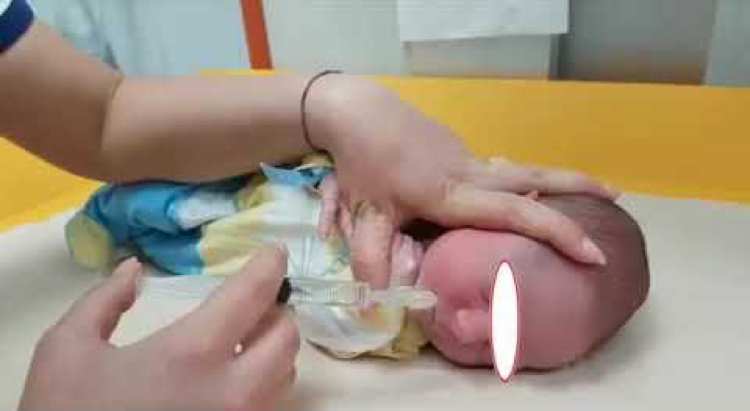
Nasal clearance is essential for preventing obstruction, infections and complications involving the middle ear, tonsils, pharynx and bronchial tract. Cleaning the nasal cavities with sterile, pyrogen-free saline solutions produced by specialized companies—specifically formulated for the neonatal and infant age group—allows removal of stagnant mucus, allergens and infectious agents, improving breathing and general wellbeing, especially before sleep and during breastfeeding, when oral breathing is limited. Homemade or uncertified solutions are discouraged, as they may pose risks of contamination or altered salinity.
Correct nasal irrigation technique
- Preparation of the solution: warm the sterile solution produced by specialized companies to a temperature of 30–32°C, ensuring comfort and reducing the risk of reflex cough or laryngeal spasms.
- Administration: use a sterile medical device, such as a syringe with an anatomical nozzle. Position the infant supine, possibly wrapped in a sheet to limit involuntary movements.
- Execution: gently tilt the head sideways; insert the nozzle into the upper nostril and gently instill the saline solution, allowing it to pass from one nostril to the other. Repeat on the opposite side.
- Post-irrigation: lift the infant into a semi-reclined position to facilitate drainage of residual secretions and clean the nostrils with a tissue or sterile gauze.
- Precaution: it is essential that the infant keeps the mouth slightly open during the procedure to facilitate liquid drainage and reduce intranasal pressure.
Types of saline solutions
- Isotonic: with NaCl concentration of about 9 g/L, equivalent to the salinity of body fluids.
- Hypertonic: with concentration higher than 9 g/L; used in selected cases to improve mucosal hydration and facilitate mucociliary clearance. Only solutions produced by specialized companies should be used, while homemade preparations must be avoided.
The cold virus is transmitted through respiratory droplets and can persist on environmental surfaces. Therefore, it is advisable to limit contact of the newborn with symptomatic individuals and reduce exposure to crowded or enclosed places, such as shopping centres and public transportation, in the first months of life, when the immune response is still immature.
