
Pregnancy represents a moment of profound physiological rebalancing for the woman, with cardiovascular, lymphatic, endocrinological and skin modifications. Two phenomena frequently observed are edema of the lower limbs (particularly legs and ankles) and the onset or accentuation of stretch marks (striae gravidarum).
In this context, the lymphatic system plays a central role in regulating interstitial fluid balance and tissue detoxification, making interventions such as manual lymphatic drainage and skin care techniques relevant. However, such interventions require a rigorous evaluation of indications and contraindications, in light of available clinical guidelines.
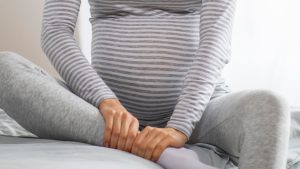
Edema of the lower limbs: pathophysiology and clinical considerations
During pregnancy, plasma volume increases, intra-abdominal pressure exerted by the gravid uterus grows, and there is a relative reduction in venous return, in addition to hormonal changes (including the effect of relaxin on vascular tissues) that lead to greater vascular permeability and water retention in the lower extremities.
From a lymphatic point of view, excess tissue fluids, combined with potential compression of venous and lymphatic pathways, may result in slowed drainage and interstitial accumulation. Professional manual guidelines indicate that physiological edema in pregnancy may be mitigated by left lateral decubitus (relieving pressure on the inferior vena cava), elevation of the lower limbs, graduated compression stockings, and non-constrictive clothing.
It is essential, however, to exclude pathological forms (e.g., preeclampsia, deep vein thrombosis) if the edema appears suddenly, in only one limb, or is accompanied by pain, redness, or systemic signs.
Manual lymphatic drainage and massage in pregnancy: indications and contraindications
Manual lymphatic drainage (MLD) is a technique aimed at stimulating lymph circulation in the superficial and deep lymphatic vessels, promoting removal of excess fluids, reducing the sensation of heaviness, and potentially supporting tissue detoxification.
Indication
In selected contexts, MLD may be useful for pregnant women who present bilateral edema of the lower limbs, heaviness, significant water retention, and absence of high-risk concomitant conditions. Sources report that “lymphatic drainage may be helpful in relieving the sensation of ‘heavy’ legs and edema during pregnancy.”
Contraindications and precautions
- Individuals with high-risk pregnancy (e.g., gestational hypertension, preeclampsia, confirmed deep vein thrombosis) should avoid MLD or undergo it only after specialist evaluation.
- It is recommended to avoid manipulations of the abdominopelvic compartment in the first and last months of pregnancy, as they could theoretically stimulate uterine contractions.
- Treatment must be performed by professionals experienced in prenatal techniques, with adequate training and knowledge of the anatomical and physiological modifications of pregnancy.
Stretch marks (Striae gravidarum): etiology and intervention options
Stretch marks represent linear lesions of the reticular dermis, characterized by alterations of collagen and elastin fibers, often following rapid skin stretching and hormonal changes (e.g., increased cortisol, release of free radicals) that weaken the connective matrix. Incidence is high: approximately 50–90% of pregnant women are affected.
On the preventive side, dermatological sources state that no topical agent currently has strong clinical evidence for preventing stretch marks. A Cochrane review found that topical preparations used during pregnancy did not show significant efficacy in preventing striae gravidarum. However, maintaining adequate skin hydration, proper nutritional intake (vitamin C, E, zinc, proteins), and gradual weight gain remain recommended measures to support skin health. Moreover, light (non-invasive) skin massage, moderate exercise, and avoidance of rapid weight increases may help improve skin elasticity, although they do not guarantee the absence of stretch marks.
Clinical integration: synergies between the lymphatic system, edema and skin changes
In the context of pregnancy, edema of the lower limbs and formation of stretch marks share common components: increased fluid volume, reduced efficiency of lymphatic/venous drainage, tissue distension, and skin modifications. Treatment or mitigation of edema — for example through appropriate positioning, compression stockings and MLD where indicated — may help improve circulation, reduce tissue stasis and promote better oxygenation and nourishment of skin tissues. In this way, although indirectly, they may also support skin quality and potentially reduce the severity of stretch marks.
It is essential to clarify that the presence or elimination of edema does not directly act on the deteriorated dermal matrix of stretch marks: genetic factors, hormonal variations and the speed of distension remain determining factors.
Conclusions
In pregnant women, edema of the lower limbs and the formation of stretch marks constitute two central aspects of pregnancy adaptation and represent complementary intervention targets. Manual lymphatic drainage, when performed by qualified professionals and in the absence of contraindications, may be a useful complement to edema management, contributing to maternal wellbeing and lymphatic-venous functionality. Regarding stretch marks, although no universally effective topical interventions exist, skin care, a healthy lifestyle and weight management represent recommended pillars. In all cases, gynecological/obstetric evaluation and, if necessary, dermatological or lymphological consultation remain essential for a personalized and safe approach.
